- UL 3601
The Tragedy of Trash: Rediscovering a Circular Approach to Lithium-Ion and Other Rechargeable Batteries
What happens when the batteries powering our modern lives become tomorrow’s toxic trash? This case study dives into UL 3601 — the groundbreaking standard redefining circularity for lithium-ion and rechargeable batteries. Explore how design, disposal, and transparency can help turn a global e-waste crisis into an opportunity for sustainability.
Abstract
Rechargeable lithium-ion (Li-ion) and other rechargeable/secondary batteries are rarely recycled properly 1. Similarly, recycling lithium-ion batteries requires careful attention as they are highly volatile. If damaged, they can ignite and cause fires in municipal waste and recycling facilities. Despite a growing need, the circularity of Li-ion rechargeable batteries remains low due to supply chain pressures of critical minerals, a growing supply and demand gap, and limited knowledge of recycling responsibilities. UL 3601, the Standard for Measuring and Reporting Circularity of Li-ion and Other Secondary Batteries, was created in July 2025 to proactively address sustainability and circularity issues with lithium-ion and other rechargeable batteries. The standard offers a comprehensive approach to battery sustainability, addressing environmental impact from design through end of life, while promoting circular economic principles in the rapidly growing battery industry. Safety standards like UL 3601 significantly address issues of electronic waste, sustainability, and circularity for Li-ion and secondary rechargeable batteries.
Learning Objectives
- Understand the impact of electronic waste — specifically lithium-ion and other rechargeable batteries — on the environment and economy
- Identify personal knowledge and awareness of proper battery care and disposal decisions
- Apply resources to identify mechanisms for safe disposal and recycling of lithium-ion batteries
- Analyze the diverse perspectives of the technical committee that develops technical safety and sustainability standards for lithium-ion batteries
- Evaluate and propose a solution to recommend lithium-ion battery and other rechargeable battery manufacturers to pursue UL 3601 certification and compliance


Real-world context
Lithium-ion batteries are used in many electronic devices today. Electronic devices that do not work should be properly disposed of to prevent e-waste.
But there are risks
E-waste is getting out of hand, and improper disposal and recycling of lithium-ion batteries lead to risks of thermal runaway and public health issues due to toxic exposure from harmful substances leaching into the soil and water.
For example
Lithium-ion batteries tossed in the trash and recycling may lead to fires in waste transportation vehicles and facilities.


If e-waste were visible in our own neighborhoods instead of exported, burned, or buried elsewhere, would we change our consumption and disposal habits?
Background
“Reduce, reuse, recycle” is a popular slogan to encourage environmental consciousness and conservational health. It’s a saying that’s been ingrained in American students from an early age, but efforts to encourage reuse and recycling began before this slogan was introduced. While the popular phrase is believed to have first been explored in 1970 around the first Earth Day, municipal workers began collecting garbage and setting aside reusable trash in the 1800s 2. Dedication to this cause has waxed and waned over the years. For example, during World War II, people began recycling household products like nylon stockings and tin from toothpaste tubes in the name of war effort 2. However, in 1960, a little more than 6% of all waste was municipally recycled. The rate has grown to over 32% in 2023 2.
Still, electronic waste, or e-waste, from malfunctioning and outdated technology, is one of the fastest-growing solid waste components in the world. Every year, millions of tons of computers, mobile phones, large household appliances, and medical equipment are improperly recycled, stored in homes and warehouses, and dumped into landfills. E-waste is also considered a hazardous waste that contains toxic materials and leaches toxic chemicals into the environment when improperly dumped or inappropriately recycled 3, 4. Some experts predict that each person in the U.S. will produce almost 1 ton of electronic waste over his or her lifetime 5, 6. In fact, in 2022, the United Nations calculated that approximately $91 billion in valuable metals are lost due to unrecycled e-waste. By contrast, $28 billion has been recouped from recycled secondary raw materials — materials that have been recovered from waste that can be reused 4, 7. Reclaiming these materials through e-waste recycling helped avoid approximately 900 million tons of primary ore extraction. Ultimately, this helps to reduce waste, save money, and prevent public exposure to toxins.
To help with this effort, ULSE has developed several standards to address sustainability and circularity. UL 110, the Standard for Sustainability for Mobile Phones, was developed to address one of the largest contributors to e-waste: mobile phones. The standard guides manufacturers in design, manufacturing, use, and end-of-life management for one of the world’s most widely used technologies. For example, have you ever noticed that popular cell phone providers are always encouraging consumers to trade in their old phone no matter the condition? The standard provides requirements for programs like these, to not only encourage recycling of e-waste, but also to help maximize repair and refurbishment protocols 5, 8. The requirements help to reduce e-waste, promote the reuse of older electronics, and facilitate recycling of parts through proper disassembly 5.
Problem
While the record volume of e-waste being generated in the 21st century is quickly becoming a problem, the types of e-waste must also be addressed. Lithium-ion batteries are a special case. These batteries are used to power many devices, such as mobile phones, electric vehicles, hoverboards, laptops, drones, power banks, wearable technologies, public transit vehicles, headphones, satellites, children’s toys, e-cigarettes, tablets, and small and large appliances 10, 11.
Because of their construction and chemistry, Li-ion batteries need to be treated differently from regular waste or recycling. Li-ion batteries are made up of an anode, cathode, separator, electrolyte, and two current collectors. While the anode and cathode house the lithium, the electrolyte carries positive lithium ions back and forth through the separator from cathode to anode during battery charging, and from cathode to anode during discharge. The ion movement creates a charge that can be used to supply the electrical current and power electronic devices. As a result, this type of battery can be reused due to its rechargeable nature, offering high energy density in a compact design — making it a powerful and efficient choice for many consumers.
Unfortunately, many of these batteries are discarded into the trash and improperly recycled, resulting in fires from thermal runaway at municipal waste facilities and material recovery facilities 12. Thermal runaway can occur due to physical damage to the battery during the transportation and sorting process of household waste disposal and recycling. Thermal runaway is the uncontrolled release of thermal energy caused when a lithium-ion battery’s separator fails due to crushing, puncturing, overheating, or other physical damage. When it fails, lithium ions move unrestricted within the battery, creating intense heat, gases, fires, and explosions. The actions involved in collecting, sorting, recycling, or dumping household and municipal waste can create fires, explosions, toxic gas and material release, and potentially injuries for people and machinery handling the waste.
To avoid these dangers, lithium-ion batteries need to be recycled separately from household waste. Careful recycling efforts not only help keep workers and recycling plants safe, but they have other positive impacts as well. When a Li-ion battery-powered device reaches the end of its life cycle, the U.S. Environmental Protection Agency (EPA) recommends finding a nearby recycling location for the used device and not putting Li-ion powered devices in household waste or municipal recycling bins 11, 12, 9. Li-ion batteries are regulated under federal and state guidelines through the Resource Conservation and Recovery Act 40 CFR Part 273 and 49 CFR 173.185 as universal waste which requires specific provisions for safe management and transportation. Despite the fact that this regulation was written before the invention of Li-ion batteries, it is best practice to dispose of these batteries properly utilizing specific battery or electronic collection programs like those highlighted in ULRI’s “Be Nice to Your Device” campaign9.
Recycling lithium-ion batteries has simple and compound benefits. Recycling Li-ion batteries separately could improve the issues of toxicity and fire hazards at waste facilities and could also help increase demand for Li-ion batteries due to an increased market for electric vehicles, energy storage systems, and portable consumer electronics 10, 13, 14, 15. Additionally, the concentrations of cobalt, nickel, lithium, and manganese recovered from spent Li-ion batteries often exceed the concentrations of these materials in natural ore, making the “waste” in Li-ion batteries a highly enriched and valuable resource. 12, 16. Finally, not only can the focus on circularity encourage economic gains, King 17 notes that the “potential environmental impact is also clear. The move to a circular economy — a system that aims to reduce, reuse, and recycle materials — could address 70% of global greenhouse emissions.
Despite the benefits of utilizing rechargeable batteries and recycling them properly, Li-ion rechargeable batteries are often not recycled as they should be. Hence, an irony results: technology that in theory could improve circularity and sustainability ends up posing a threat to them. Li-ion rechargeable batteries are expensive to produce, which seems like a valuable investment because of their potential to recharge and be repurposed at the end of their life. But because they are not often recycled properly, they end up both being dangerous when disposed of and foregoing the potential benefit from their component materials being reused.
Why are Li-ion batteries not always recycled to maximize their circularity and global benefits? One reason is consumer habits. The EPA has recommended sending alkaline and zinc-carbon batteries to the local or state solid waste authority for decades, so many communities have become accustomed to thinking that any battery, including lithium-ion batteries, can be disposed of safely in everyday household waste.
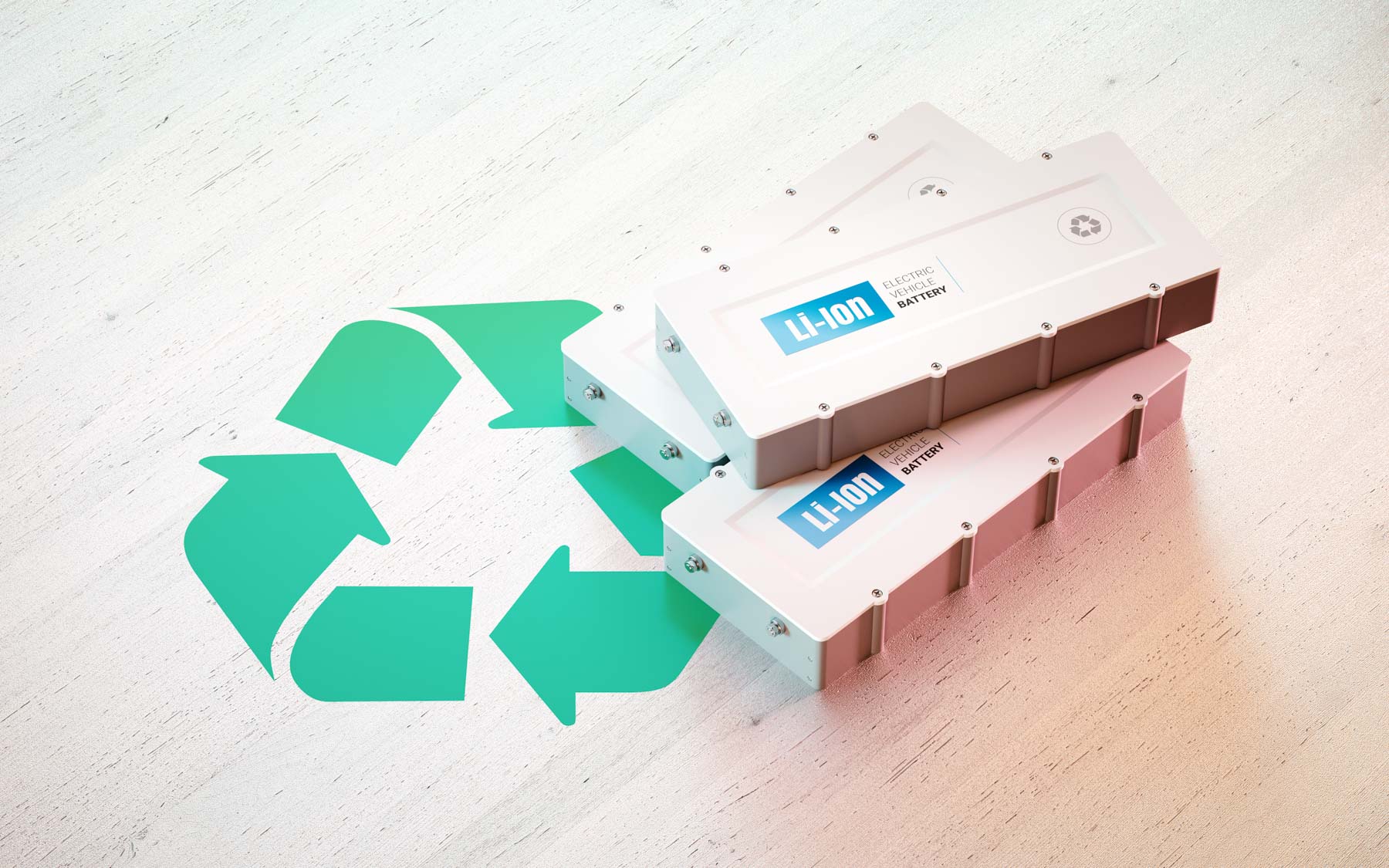
Secondly, consumers often don’t know how to identify Li-ion batteries. Despite the prevalence of lithium-ion battery-powered devices, almost 50% of Americans admit to not knowing anything about Li-ion batteries 18, and even more (60%) are unaware that Li-ion batteries power so many everyday products 18, 19. There are no standardized labels for Li-ion batteries in the U.S., however, the “chasing arrows” recycling symbol found on some Li-ion batteries can confuse consumers, causing them to assume that such batteries should be put in the trash or regular recycling 12. As a result, Li-ion rechargeable batteries are commonly disposed of incorrectly.
Lastly, inconsistent regulation can deepen confusion. For consumers or companies on the lookout for Li-ion batteries, regulation does not always seem to match expectations. Li-ion batteries are often classified as common household waste, which the EPA does not regulate under 40 CFR 261.4(b)(1) 12. The confusion associated with recycling Li-ion batteries leads to a net problem: Li-ion batteries are not always being recycled to maximize their potential material circularity in a green economy, and improper recycling creates dangerous conditions for people and infrastructure 20.
Question
UL Research Institutes’ Electrochemical Safety Research Institute created the “Be Nice to Your Device” campaign to inform the public about safely recycling lithium-ion batteries. Visit BeNiceToYourDevice.org 9 to discover the closest location to recycle your old, used electronics, especially those that contain Li-ion batteries.
Approach
To address the concerns associated with lithium-ion batteries, ULSE created a series of standards on the sustainability, economic and environmental trends, and community impact of lithium-ion batteries. At the heart of this effort was the goal to incorporate at least three of the UN’s Sustainable Developmental Goals: 1) Industry, Innovation, and Infrastructure (Goal #9), 2) Sustainable Cities and Communities (Goal #11), and 3) Responsible Consumption and Production (Goal #12) 21. As a result, ULSE and UL Solutions personnel came together on a technical committee in the ULSE Collaborative Standards Development System, along with subject matter experts from industry and the regulatory community, to provide a life cycle perspective on battery circularity and sustainability criteria to support manufacturers in integrating circularity and sustainability best practices into batteries.
All components of the battery life cycle are discussed including materials, manufacturing, packaging and energy use, end-of-life management, and corporate practices. In addition, the technical committee reviewed current abiding regulations and considered the following sources:
- UL 3600, the Standard for Sustainability for Measuring and Reporting Circular Economy Aspects of Products, Sites and Organizations
- ISO 14021, the Standard for Environmental Labels and Declarations
- EN 45557, General method for assessing the proportion of recycled material content in energy-related products
- UL 110, the Standard for Sustainability for Mobile Phones
- IEEE 1680, the Standard for Environmental and Social Responsibility Assessment of Computers and Displays
- 49 CFR 173.24 & 24a, General requirements for packaging and packages
- 49 CFR 173.185, Lithium cells and batteries
- ANSI/CAN/UL 1974, the Standard for Evaluation for Repurposing or Remanufacturing Batteries
- UL 2710, the Outline of Investigation for Sustainability of Electronic and Electrical Products
- ULE 1378 the Standard for Sustainability Outline for Portable Rechargeable Batteries and Portable Chargers
- IEC 63218, the Standard for Secondary cells and batteries containing alkaline or other non-acid electrolytes, secondary lithium, nickel cadmium and nickel-metal hydride cells and batteries for portable applications – Guidance on environmental aspects
- ISO 9001, the Standard for Quality Management Systems
- EU chemical regulations: REACH and RoHS
- Resource Conservation and Recovery Act
- Argonne GREET
UL 3601, the Standard for Measuring and Reporting Circularity of Li-Ion and Other Secondary Batteries, published in July 2025, is the second ULSE standard for circularity. Once the seed documents and rationale were developed for each draft iteration, feedback was received from the technical committee, and the final documents were modified and corrected based on committee recommendations.
Question
A diverse representation of occupational perspectives is needed to serve on any standard technical committee. These individuals are responsible for providing meaningful input and recommendations for the safety and sustainability of various consumer products. If you were to serve as a stakeholder on a committee for UL 3601, what would be your hypothetical role and what input could you add to the group discussions?
Solution
Through UL 3601, ULSE proposes circularity metrics to be used by manufacturers for their lithium-ion battery products. The standard uses two evaluation methods. The first evaluation method is levels of achievement, which covers the eight aspects of the battery life cycle: design, material, manufacturing and operations, packaging, use, extension of useful life, end-of-life management, and corporate practices. The second evaluation method is the Circularity Transparency Label, which provides information on the overall material flow concerning the product.
The Circularity Transparency Label consists of both inflow and outflow metrics. Inflow metrics include recycled content, closed-loop content, reused components and by-product synergy, and the outflow metrics capture recyclability, reuse potential, and refurbishment capability. The overall product circularity score (otherwise known as the Circularity Transparency Label) is the average of the inflow and outflow rates. Organizations and products can be certified to UL 3601 with compliance in developing and displaying this label. Consequently, through this comprehensive marking, consumers are better equipped to understand the circularity of the products they purchase. It empowers them to evaluate products based on their sustainability preferences and circularity standards while discouraging noncompliant practices.

From Table 6.1, Levels of Achievement of UL 3601 22
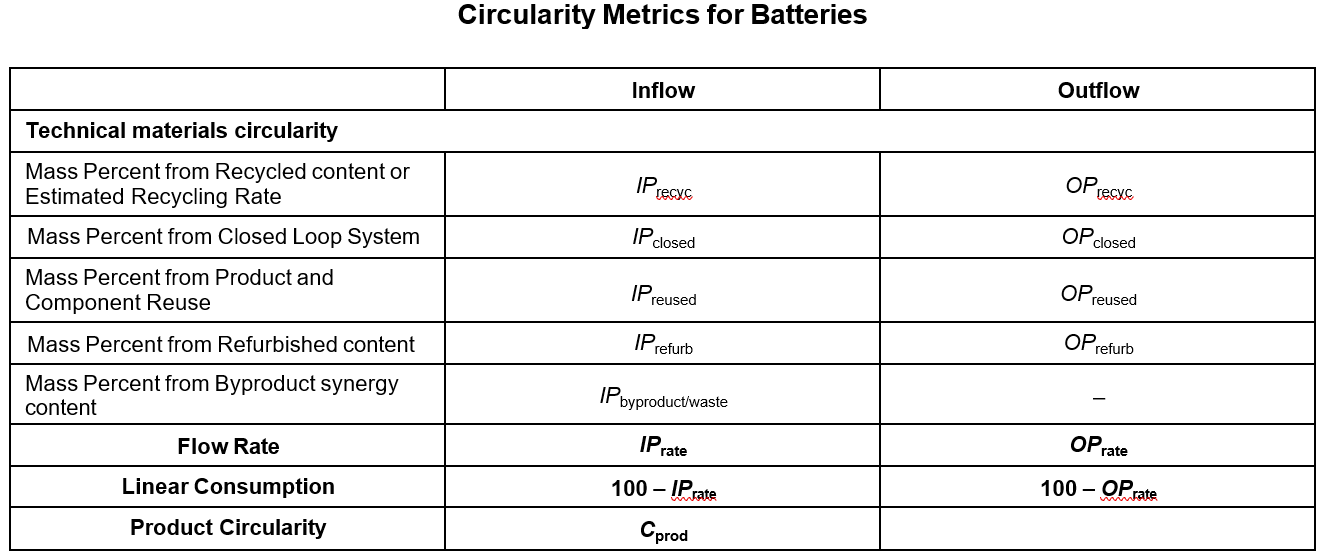
From Table C.1 of ANNEX C (informative) – CALCULATING SITE MATERIAL FLOW METRICS of UL 3601 [22]
Requirements for recycling Li-ion batteries have already shaped – and been shaped by – policy and public awareness campaigns. For example, the Infrastructure Investment and Jobs Act includes provisions supporting energy system modernization, codes and standards research, and battery processing, manufacturing, recycling, and labeling. Section 70401 of this law directs the EPA to develop best practices for battery recycling and voluntary battery labeling guidelines. As a result, the EPA and ULSE remain collaborative partners in advancing the goals of this legislation through standard development and recognition of UL 3601 as a framework for battery circularity reporting 23, 24.
Similarly, UL 3601 influenced legislative efforts at the state level. In 2025, California’s Senate Bill 615 passed the state senate, requiring electric vehicles batteries to be “repaired, repurposed, or recycled” 25. This legislation aligns with ULSE’s broader portfolio of battery-related standards, including UL 1974, which addresses the evaluation of batteries for repurposing and remanufacturing. Collectively, these efforts reflect growing recognition of the importance of electric vehicle battery sustainability as a critical step toward a more circular battery economy.
Beyond policy efforts, ULSE has also supported public awareness through educational outreach. In collaboration with Battery 360 Alliance and other partners ULSE hosted a series of webinars focused on circular economy principles for batteries. During these sessions, ULSE standards specialist, Esha Saxena, emphasized that “circularity is not just about recycling at the end — it’s about how we design, document, and deliver every battery system from the very beginning. Standards provide the trust and transparency need[ed] to make this shift real.”
Overall, UL 3601 provides a structured and transparent approach for evaluating and communicating the circularity of Li-ion battery products, supporting both manufacturers and consumers to make informed, responsible choices. By integrating life-cycle metrics and the Circularity Transparency Label, this standard not only promotes responsible design, safer disposal, and more effective recycling practices, but also advances broader environmental and economic objectives. As policies like Infrastructure Investment and Jobs Act and California’s SB 615 and public education initiatives gain traction, the shift toward a circular economy becomes more attainable. Ultimately, UL 3601 exemplifies how thoughtful design, clear standards, and consumer engagement can transform a hazardous waste challenge into a sustainable opportunity.
A standard is a critical tool for ensuring global problems are addressed through iterative, collaborative problem-solving.
This is just a small recap, and you are encouraged to view the standard, in full, for free, by creating an account at ShopULStandards.com and using the Digital View feature.
Discussion Questions
Li-ion batteries that are certified to UL 3601 require manufacturers to comply with specific circularity principles to achieve a level of bronze, silver, or gold and display the Circularity Transparency Label. What steps would you take to encourage all lithium-ion battery manufacturers to comply with this UL standard?
Glossary
- Circular economy
A production model that keeps materials and products in use for as long as possible through sustainability practices such as reuse, refurbishment, remanufacture, and recycling.
- Lithium-ion battery (LIB)
A rechargeable battery that stores energy by moving lithium ions between its anode and cathode electrodes.
- Secondary Raw Materials
Materials recovered from waste that can be reused in production or manufacturing
- Sustainable Development Goals
17 global goals adopted by world leaders in 2015 to end poverty, protect the planet, and ensure peace and prosperity for everyone by 2030.
- Thermal runaway
One of the primary risks related to lithium-ion batteries; a phenomenon in which the lithium-ion cell enters an uncontrollable, self-heating state. Thermal runaway can result in the following: ejection of gas, shrapnel and/or particulates (violent cell venting); extremely high temperatures; smoke; and fire.
- Waste
Material that does not possess characteristics or meet technical specifications for use in the marketplace without further processing and will be discarded or released to the environment.
References
- Munonye, W. C., Ajonye, G. O., Ahonsi, S. O., Munonye, D. I., Chigozie, I. O., & Akinloye, O. A. (2025). Advancing Circularity in Battery Systems for Renewable Energy: Technologies, Barriers, and Future Directions. Advanced Energy and Sustainability Research, https://doi.org/10.1002/aesr.202500255
- Eldred, S. M. (2025, May 28). When Did Americans Start Recycling? History. https://www.history.com/articles/recycling-history-america
- World Health Organization. (2024, October 1). Electronic waste (e-waste). https://www.who.int/news-room/fact-sheets/detail/electronic-waste-%28e-waste%29
- United Nations Institute for Training and Research. (2024). Global e-waste monitor 2024: Electronic waste rising five times faster than documented e-waste recycling. https://unitar.org/about/news-stories/press/global-e-waste-monitor-2024-electronic-waste-rising-five-times-faster-documented-e-waste-recycling
- UL Standards & Engagement. (2024a, May 14). Providing sustainable avenues for e-Waste with UL 110. UL Standards & Engagement: Expert Perspectives. https://ulse.org/insight/news-providing-sustainable-avenues-e-waste-ul-110/
- Shirey, T. (2026, March). How many devices will you use in your life? WebFX. https://www.webfx.com/blog/general/how-many-devices-will-you-use-in-your-life/
- Science Direct. (2025). Secondary Raw Materials. https://www.sciencedirect.com/topics/engineering/secondary-raw-material
- UL Standards & Engagement. (2022, May 5). Sustainability Standard explores recycling and disposal methods for cell phones, electronics, and other e-waste. UL Standards & Engagement. https://ulse.org/insight/ul-standards-engagement-standards-matter-sustainability-standard-explores-recycling-and-disposal/
- UL Research Institutes (2025). Be Nice to Your Device. UL Research Institutes: Electrochemical Safety Research Institute. https://benicetoyourdevice.org/
- UL Research Institutes’ Institute for Research Experiences & Education. (2021). What is a Lithium-Ion Battery? (Factsheet). https://doi.org/10.60752/102376.27016420.v1
- U.S. Environmental Protection Agency. (2025, January). Used household batteries. Reduce, Reuse, Recycle. https://www.epa.gov/recycle/used-household-batteries
- U.S. Environmental Protection Agency. (2021, July). An analysis of Lithium-Ion Battery Fires in Waste Management and Recycling. EPA 530-R-21-002
- Argus. (2017). The lithium market – the future is electric. https://www.argusmedia.com/-/media/Files/white-papers/the-lithium-market-the-future-is-electric.ashx
- Ding, Y., Cano, Z. P., Yu, A., Lu, J., & Chen, Z. (2019, March). Automotive Li-ion batteries: Current status and future perspectives. Electrochemical Energy Reviews, 2(1), 1-28. https://dx.doi.org/10.1007/s41918-018-0022-z
- Timpane, M. R., Madden, B., Segundo, M., Patterson, A., & Dobroski, L. (2017, November 16). South Bayside Waste Management Authority lithium-based battery assessment. https://rethinkwaste.org/wp-content/uploads/legacy_media/7-a-attachment-d-lithium-based-battery-assessment-2017.original.pdf
- Jacoby, M. (2019, July 14). It’s time to get serious about recycling lithium-ion batteries. C&EN, 97(28). https://cen.acs.org/materials/energy-storage/time-serious-recycling-lithium/97/i28
- King, S. (2022, December 13). Reduce, Reuse, Recycle: Why all 3 R’s are critical to a circular economy. Scientific American. https://www.scientificamerican.com/article/reduce-reuse-recycle-why-all-3-rs-are-critical-to-a-circular-economy/
- UL Standards & Engagement. (2024b, June 25). Lithium-ion battery incidents in aviation: 2024 Data review. UL Standards & Engagement: Insights & Data. https://ulse.org/insight/li-ion-incidents-aviation-2024-data-review/
- UL Standards & Engagement. (2024c). Lithium-Ion Battery Incidents and Their Impact on Aviation Safety. https://ulse.org/insight/data-insights-lithium-ion-battery-incidents-and-their-impact-aviation-safety/
- Jeevarajan, J., Juarez-Robles, D., Joshi, T., Rauhala, T., & Kathirvel, K. (2023). Safety in the Recycling of Lithium-Ion Batteries (Version 1). UL Research Institutes Electrochemical Safety Research Institute . https://doi.org/10.60752/102376.27006670.v1
- UL Standards & Engagement. (2022, May 21). The UN Sustainable Development Goals for 2030. UL Standards & Engagement. https://ulse.org/insight/the-un-sustainable-development-goals-for-2030/
- UL Solutions. (2025). Measuring and Reporting Circularity of Li-ion and Other Secondary Batteries (UL 3601). Retrieved from https://www.shopulstandards.com/ProductDetail.aspx?UniqueKey=48637&ShowFreeviewModal=1
- Infrastructure Investment and Jobs Act, H.R. 3684 § 40001 et seq. (2022). https://www.congress.gov/bill/117th-congress/house-bill/3684/text
- U.S. Environmental Protection Agency. (2024, November 21). Mid-Format battery recycling: Ensuring safe end-of-life management. [PowerPoint slides]. EPA. https://www.epa.gov/system/files/documents/2024-12/508-compliant-nov-21st-mid-format-batteries-webinar-slides.pdf
- Senate Bill No. 615 Vehicle traction batteries, 2025–2026 Reg. Sess. (Cal. 2025). https://leginfo.legislature.ca.gov/faces/billStatusClient.xhtml?bill_id=202520260SB615