- UL 2034
Silent, Deadly, and Everywhere: Carbon Monoxide Demands Detection
Abstract
Carbon monoxide poisoning is the second most common cause of non-medicinal poisoning death in the U.S. Carbon monoxide is a colorless, odorless, and tasteless gas that can kill within minutes at high concentrations. Americans tend to be largely unaware of the sources and risks of carbon monoxide; however, carbon monoxide alarms certified to UL 2034, the Standard for Carbon Monoxide Alarms and Gas Detectors, can help keep individuals protected from this invisible threat. Policymakers can use this standard as a resource, in partnership with building code regulations and legislation, to help improve CO detection in public places and save lives.
Learning Objectives
- Understand the impacts of CO poisoning on the human body.
- Apply understanding of CO poisoning to design choices.
- Identify various causes of CO poisoning.
- Analyze potential locations of CO detectors in various structures.
- Evaluate the pros and cons of making CO detectors mandatory in various settings.


Real-world context
We rely on fuel combustion for heating, transportation, energy, and hot water.

But there are risks
If oxygen is limited, then poisonous carbon monoxide gas can be emitted through incomplete combustion.
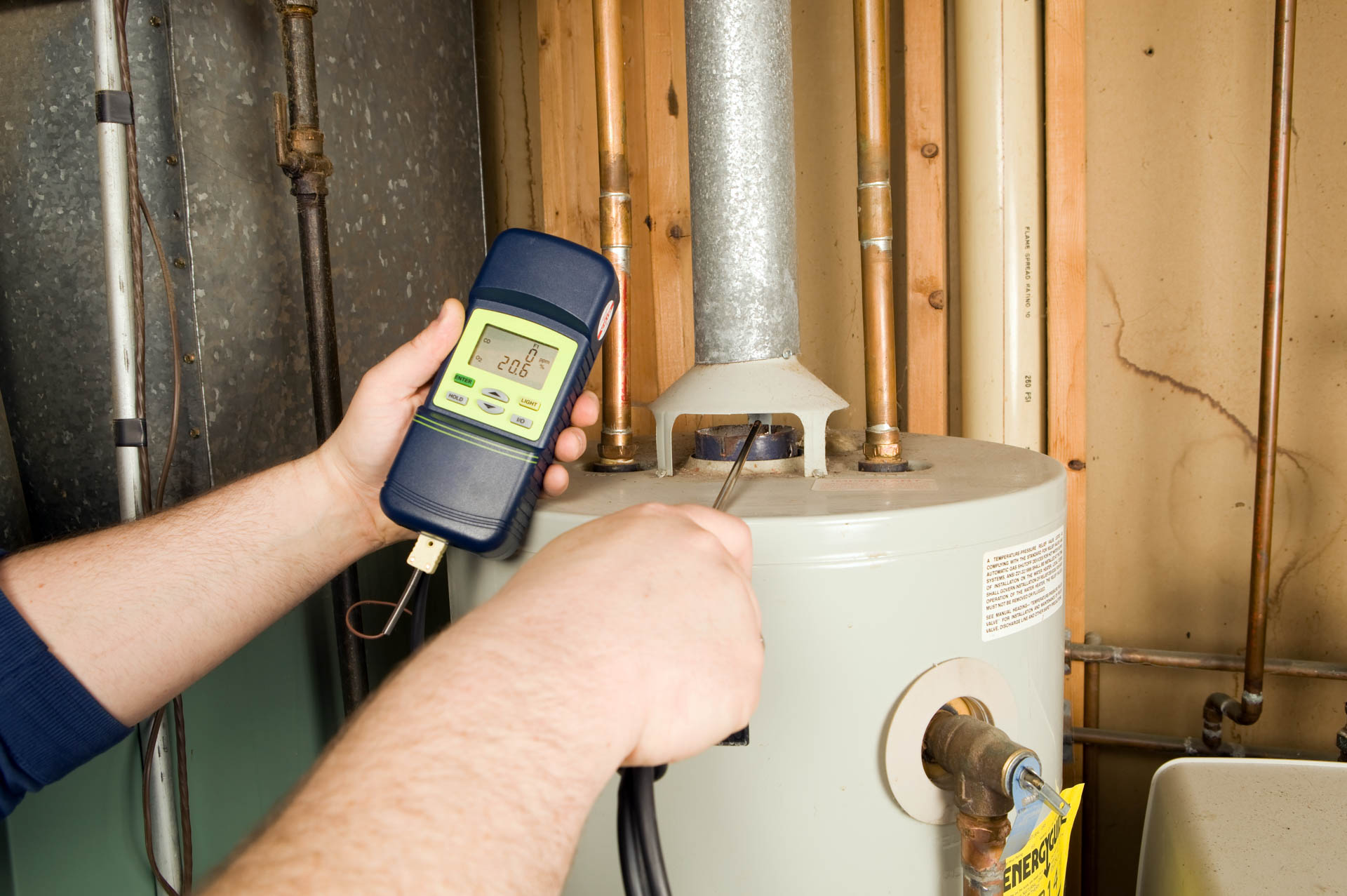
For example
Humans can become asphyxiated and die within minutes if an enclosed space like a bedroom, car, truck cab, or RV, traps CO at high enough concentration.


How can safety standards alert people to the risks of CO poisoning at home and away?
Background
Fourteen-year-old Miller Gardner was on vacation with his parents, former New York Yankees player Brett Gardner and his wife, Jessica, at the Arenas Del Mar resort in Costa Rica. Miller’s hotel room was next to a machine room, where faulty combustion was causing carbon monoxide to fill the machine room and drift into the room next door. Miller died from carbon monoxide poisoning in his sleep. Initial investigations of the room found there were up to 600 parts per million (ppm) in the vicinity 1. The maximum safe indoor level of CO over 8 hours is 9 ppm and the recommended safe level is 0 ppm.

Carbon monoxide (CO), a single carbon atom covalently bonded to a single oxygen atom, is one of the most lethal substances we might encounter in our lives. When humans inhale CO, the hemoglobin in our red blood cells absorbs carbon monoxide to become carboxyhemoglobin, starving brains of the oxygen usually delivered by hemoglobin via respiration in our bodies, leading to poisoning. Miller Gardner’s carboxyhemoglobin saturation level was 64% 1. Concentrations over 50% are lethal.
CO is a byproduct of incomplete combustion. Motors, engines, and heaters that work by igniting carbon-based fuels such as gasoline, diesel, kerosene, natural gas, propane, coal, or wood can emit CO if combustion is not complete 2. Items we use every day like lawn mowers and cars, and common industrial processes like manufacturing, refineries, and transportation, can all pose an exposure threat. In February 2025, three women died in a Belize hotel room from CO poisoning likely caused by a faulty instant water heater. Portable generators are among the largest emitters of CO, producing six times more CO per hour than a car engine. After a major 2021 winter storm knocked out power in Texas, 11 people died and 1,400 sought emergency care for carbon monoxide poisoning from car exhaust, indoor wood and coal barbecue use, and portable generators while trying to stay warm during the deep freeze 3.
CO is everywhere, both at low and high levels. Unfortunately, CO is a colorless, odorless, and tasteless gas, making it hard for humans to detect it with our natural senses of sight, smell, and taste. The inability for people to detect CO contributes to it being a “hidden killer,” able to kill without any warning. Even low levels of CO are dangerous because CO exposure can compound in the body, making a low concentration of CO over time just as dangerous as a high concentration.
Question
Wall-mounted direct-heating water heaters are regarded as more energy efficient than tank-style hot water heaters. What changes would need to be made in a typical bathroom for the safe installation of a wall-mounted hot water heater replacing a tank-style water heater?
Problem
Carbon monoxide is not the only dangerous substance in our homes. Yet, it causes 400 Americans to die every year from CO poisoning not linked to fires, with an additional 100,000 CO-related emergency room visits resulting in 14,000 hospitalizations 4. With CO poisoning being such a serious threat, why are CO alarms not as common and well known as smoke alarms and detectors?
Carbon monoxide detectors work when they are installed properly. CO detectors measure the parts per million of CO in the air. Because the risk of CO is cumulative, detectors will trigger at low concentrations if exposed for several hours, or they will trigger at high concentrations in a short amount of time. Commonly, CO detectors register a changing current through a carbon monoxide-sensitive electrolyte solution. If the current increases, it means CO is present. Another method involves a change in resistance across a sensor’s chip when exposed to CO. A third method involves a color changing material that physically darkens when exposed to CO. A light sensor can detect the color change in the presence of CO.
The technology is functional and not expensive. So why isn’t everyone clamoring for CO detectors in their homes, in their hotel rooms, and in spaces where incomplete combustion may occur? The problem here is awareness and adoption. Compared to smoke detectors, CO detectors are not as widely used. According to a 2025 report by UL Standards & Engagement, over 92% of U.S. homes have smoke detectors installed, but only two-thirds of houses have any means of detecting CO at home. A full third of Americans are at risk of not knowing if they are exposed to CO and could suffer from CO poisoning.
Education around CO risk and detection is low. In the same report, twenty-nine percent of Americans reported that they did not need, or were unsure if they needed, a CO alarm in their home, especially if they already had a smoke detector. It is unclear whether these individuals recognized that CO is itself a harmful gas, rather than a byproduct of fire. Of the subset of Americans that own portable generators (29 million), 62% said they did not feel that they or their households were at risk of CO poisoning, and another 23% did not realize that portable generators are a potential source of CO 5.
Question
Identify five leisure activities where the activity itself causes CO accumulation that could be life-threatening. For example, a yacht’s motor could generate CO that might accumulate in the living areas of a boat, threatening those enjoying time inside on the yacht.
Approach
Rising CO awareness has influenced some attempts at improving CO monitors and alarm use. One approach is regulation — requiring CO alarms. But in 2024, ULSE found that the actual requirements for installing CO detectors in public and private spaces are piecemeal across localities [5]. As a result, only 30 states require CO detectors in homes, and fewer state statutes require CO detectors in other public places. Nevertheless, a ULSE survey found that 44% of American adults believed that CO detectors were needed in every state, which could lead to a false sense of security.
Figure 1.
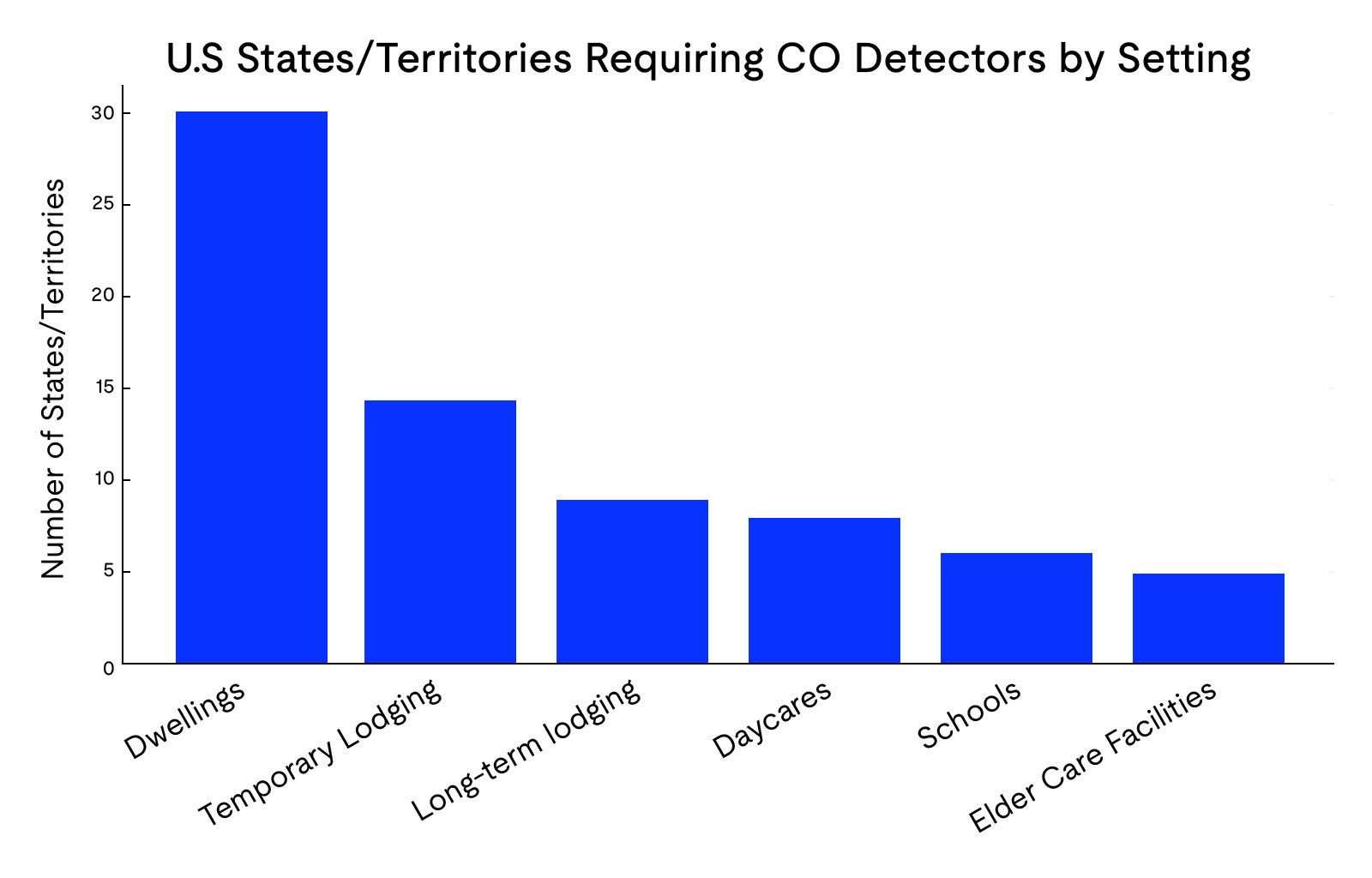
Data source: “Carbon Monoxide Detector Installation Statutes.” NCSL, July 7, 2025
Another approach piggybacks on the success of smoke alarms and detectors. Since smoke alarms are nearly ubiquitous in the United States, updating all smoke alarms to also include carbon monoxide detection might resolve some of the lack of CO detector implementation.
A third approach is education, especially informing consumers about the risks of carbon monoxide and its potential sources. Many consumers are aware that inhaling car exhaust can be lethal, but they might not be aware that portable generators also emit CO, or that some home appliances like stoves and ovens, fireplaces, hot water heaters, or furnaces can also emit CO.
A final approach is to increase personal agency in detecting CO to prevent CO poisoning. Personal protection could include traveling with CO detectors and advocating for their installation in homes. Creating technologies that work reliably when deployed at home or away is very important.
Question
How might CO poisoning risks change between types of structures such as single-family homes, hotels, apartment buildings, or cabins? Do different settings require different recommendations?
Solution
UL Standards & Engagement has more than 75 standards in its catalog that address carbon monoxide safety in residential, commercial, and industrial environments. UL 2034, the Standard for Single and Multiple Station Carbon Monoxide Alarms, was published in its first edition in 1992. Since then, it has been revised four times with the fifth edition published June 3, 2024.
UL 2034 covers CO alarms indicated for ordinary indoor locations and unconditioned areas, per applicable governing laws, codes, and standards. These locations may include recreational vehicles, mobile homes, commercial vehicles, and recreational boats with enclosed spaces and cockpits.
UL 2034 stipulates that CO alarms must emit a local audible signal if exposed to 100 ±5 ppm CO for 90 minutes, 200 ±10 ppm CO for 35 minutes, and 400 ±20 ppm CO if exposed for 15 minutes. These time and concentration values align to research on the physiological impact of CO on the body as it accumulates in the bloodstream. The standard also provides minimum alarm times, i.e., the alarm should not go off for a minimum of 16 minutes at 100 ±5 ppm CO, 8 minutes for 200 ±10 ppm, and not less than four minutes if CO concentration is 400 ±20 ppm. These minimum times are intended to reduce nuisance alarms for small amounts of CO exposure, which in turn reduces the chances that users will create danger to themselves by disabling their alarm devices in response to nuisance alarms.
To address the inconsistent CO regulations for houses, rentals, public spaces, hotels, and more across the U.S., the 2018 International Residential Code (IRC) requires listed UL 2034 CO alarms to be installed outside of every bedroom in locations where fuel-fired appliances are installed, and in every building with an attached garage[foonote number=6]. The IRC’s approach here could mandate that CO detectors become as prevalent as smoke alarms.
However, only 18 U.S. states have adopted the 2018 IRC, an indication that other solutions, such as personal agency and education are still needed. The ULSE CO Risk Assessment Report serves as a benchmark and a call to action for each state by evaluating current CO readiness and tracking improvement across the U.S. By reading this report individuals and law makers can better understand the risks to a lack of readiness, and learn concrete steps to improve citizen preparedness against the threat of CO.
With the adoption of UL 2034, CO detection might become more normalized across all geographies and demographics. If you are unpacking in a new place, whether it is a hotel, house, motorhome, or apartment, be sure that you check for, unpack, and power up your CO detectors to prevent the risk of CO poisoning.
Discussion Questions
- Should CO detectors be mandatory or voluntary in homes and public spaces?
- How might socioeconomic factors influence which households are protected by CO detectors? What should be done to address this?
- If someone dies of CO poisoning in a rental home that didn’t have a detector, who should be held legally or ethically responsible?
A standard is a critical tool for ensuring global problems are addressed through iterative, collaborative problem-solving.
This is just a small recap, and you are encouraged to view the standard, in full, for free, by creating an account at ShopULStandards.com and using the Digital View feature.
How to get involved
Share your expertise
UL Standards & Engagement is actively seeking all interested parties to participate in its standards development process and encourages diverse perspectives to join in by participating as a stakeholder. Stakeholders can submit, review, and comment on proposals for new standards or revisions to existing standards. While stakeholders do not vote, the TC considers their input during the standards voting process. Since standards affect everyone, all are welcome to participate as stakeholders. Register online through ULSE’s Collaborative Standards Development System.
Advance your career
Check out current internship and fellowship openings for opportunities to engage with standards professionals and to contribute to standards research and innovation.
References
Villanueva, D. (2025, April). Carbon monoxide poisoning possible cause of death of son of former New York Yankees player, according to judicial police. CNN. https://www.cnn.com/2025/03/31/sport/brett-gardner-son-possible-carbon-monoxide-poisoning-spt
Occupational Safety and Health Administration. (2012). Carbon monoxide poisoning. https://www.osha.gov/sites/default/files/publications/carbonmonoxide-factsheet.pdf
Trevizo, P., Larson, R., Churchill, L., & Hixenbaugh, M. (2021, April 29). Texas enabled the worst carbon monoxide poisoning catastrophe in recent U.S. history (S. Khimm, Ed.). The Texas Tribune. https://www.texastribune.org/2021/04/29/texas-carbon-monoxide-poisoning/
Centers for Disease Control and Prevention. (2024, April 17). Carbon monoxide poisoning basics. https://www.cdc.gov/carbon-monoxide/about/index.html
UL Standards & Engagement. (2024, May 29). New report: 86 million Americans are unprotected against carbon monoxide poisoning. https://ulse.org/news/news-new-report-86-million-americans-are-unprotected-against-carbon-monoxide-poisoning/
UL Solutions. (2024). Carbon monoxide alarm considerations for code authorities. https://www.ul.com/thecodeauthority/knowledge/carbon-monoxide-alarm-codes