- UL 923
Reducing the Risk of Child Scalds: The Case for Safer Microwaves
UL 923, the Standard for Microwave Cooking Appliances
Abstract
By opening microwaves and spilling hot liquids onto their faces and bodies, children can sustain life-altering scalds that require skin grafts and therapy. A group of pediatricians in Chicago noticed this disturbing trend and investigated whether microwave manufacturers could make microwaves safer for children. This case study details the risks these pediatricians observed and how their participation in UL Standards & Engagement’s standards development process led to a revision of UL 923, the Standard for Microwave Cooking Appliances, and ultimately, safer microwaves for children.
Learning Objectives
- Understand the burn risks to children in the kitchen, especially those posed by everyday appliances like microwaves.
- Apply spatial reasoning to analyze the risks that scalding poses to children.
- Identify safety features in engineered products and technologies.
- Analyze the concerns of Technical Committee 923 members and stakeholders to deduce a set of requirements for a successful UL Standards & Engagement safety standard proposal.
- Evaluate the tradeoffs between the time it takes to thoroughly research and justify a safety risk for a new standard, versus an urgent need to publish a safety standard to reduce harm.


Real-world context
No kitchen (or dorm room) seems complete without a microwave. 90% of American households own a microwave.
But there are risks
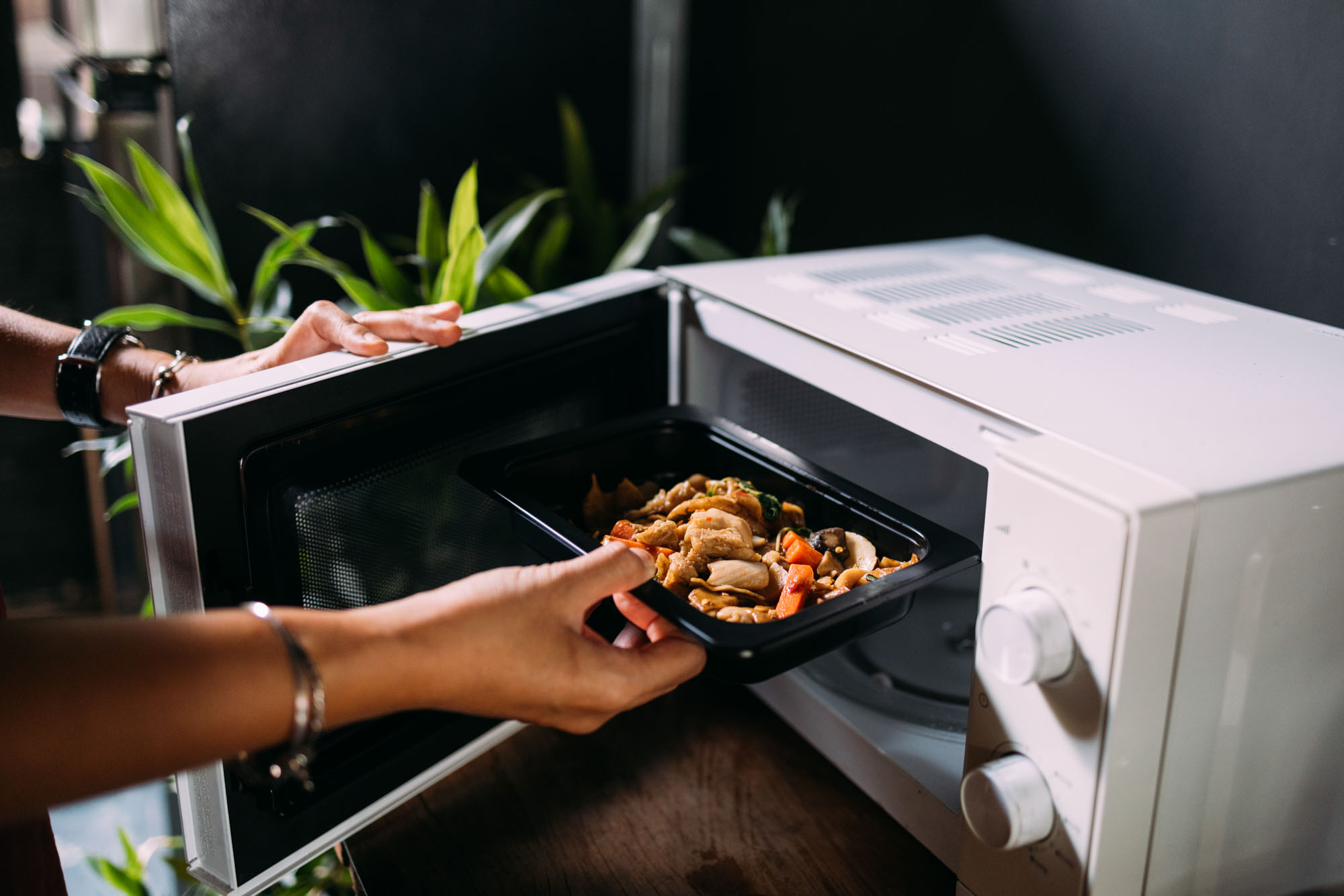
Access to the microwave and its piping hot contents is a convenience but can also be a threat if hot foods spill out onto a child.
For example
At least 600 toddlers are hospitalized every year for microwave-related scalding.


How could a group of concerned pediatricians inform the industry of scalding risks and effect change to help keep children safe?
Background
Nearly one quarter of the 400,000 burns that require an emergency room visit in the U.S. every year affect children aged 12 months to 4 years.1 Children’s burns are more often caused by liquid or steam scalding rather than fire,2 with the kitchen being the site of most scalds. Foods and drinks being prepared, cooked, or consumed are the common culprits for children, toddlers, and even infant injuries. Knocking pots or pans off the stove, pulling tablecloths or placemats to spill hot food, or touching hot tap water and steam can cause burns and scarring on anyone, and children are more likely to knock, pull, and touch out of curiosity and naivete.
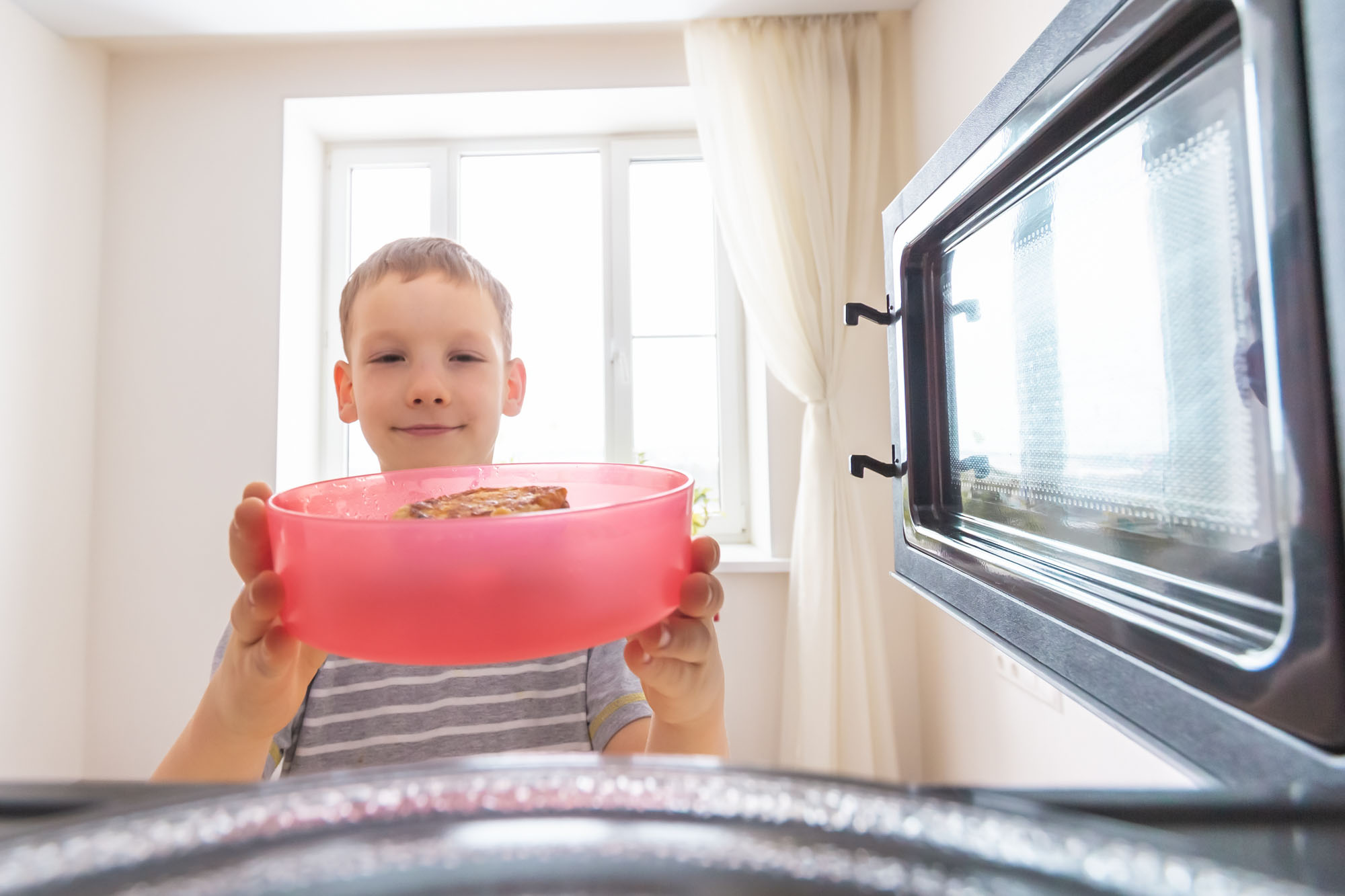
For pediatricians and public health officials, stopping children from being scalded in the kitchen is a challenge because there are so many ways that children can contact hot liquids there. In 2008, three Chicago-based pediatricians researching pediatric burn rates found an “unexpected pattern of injury.” Among the 118 children under the age of 5 admitted to the University of Chicago Burn Center from 2002 to 2004 for unintentional burns, nearly 10% were scalded after opening a microwave oven and removing hot substances by themselves. An additional 16% of child scalding burns occurred when older caretaker children, ranging from 7 to 14 years old, were cooking or carrying scalding substances near a child.3
According to the 1990 article, “The Causes, Cost and Prevention of Childhood Burn Injuries,” interventions existed for tap water scalds at the time, but solutions to “kitchen” scalds were elusive.4 The Chicago pediatricians, Gina Lowell, Kyran Quinlan, and Lawrence J. Gottlieb, each had previously focused on various methods of childhood injury prevention. Lowell researched flu vaccines and vaccine delivery, Quinlan researched the impact of parent education through pediatric injury prevention counseling, and Gottlieb was a leader in grafting and other burn treatments. Together, Lowell, Quinlan, and Gottlieb realized that microwave access, engineering, and/or prevention education was lacking and posed a threat to children. They set out to learn more.
Question
Why are children prone to burns, including scalds, in the kitchen? Where on a child might a kitchen-based burn be located? What unique challenges do child kitchen burn victims face for treatment and recovery?
Problem
In the following years, Lowell, Quinlan, and Gottlieb expanded their analysis of childhood scalding. In 2011, Quinlan and Gottlieb partnered with additional researchers to study the behavior of forty children aged 15 months to 5 years old around microwave ovens. Using a laboratory test, they found that all 4-year-old subjects could open the microwave, run the microwave, and retrieve cooked food from it. Younger children could as well, with 90% of 2-year-olds capable of the tasks, and even children as young as 17 months old completing the tasks.2
The risk was obvious. The laboratory test showed that children could injure themselves with a microwave. But was it happening in the real world? Or would caregiver education and supervision mitigate the risk?
Lowell and Quinlan next examined the Consumer Product Safety Commission’s National Electronic Injury Surveillance System database for a nearly 11-year period (January 2002 to December 2012), to better understand microwave-related burn injuries for children aged 12 months to 4 years. They found nearly 11,000 microwave-related burns, 66.7% of which involved children who were burned after opening and handling the heated contents of the microwave. Records indicated that most burns occurred on the face and upper torso, with 15.5% requiring additional hospitalization or specialty responses after emergency room visits. Water, noodles, and soup were the top three scalding substances.5
The doctors worked with undergraduate engineering students to develop an engineering solution to the problem and began to believe that a manufactured solution, implemented across the industry, would be the best way to prevent microwave scalds.
Lowell and Quinlan began advocating to raise awareness of the microwave scalding issue at national conventions and publishing their research. They were convinced that if they documented the problem and shared it with microwave makers, then the producers would understand the need and change their products to protect children.6 But how could doctors make microwave manufacturers aware of the issue and ready to change?
Question
Consider burning risks in your personal routines. What technologies exist to prevent you from being burned by appliances or tasks in your daily life? What risks are unmitigated that may one day require an engineering solution?
Approach
In their research, the group of pediatricians discovered that a UL Standards & Engagement safety standard, UL 923, the Safety Standard for Microwave Cooking Appliances, had been in place since October 1977. The Food & Drug Administration regulated early microwaves, and the associated safety standards and tests ensured that microwaves did not emit excessive radiation, and that doors could not be opened when the microwave was running. Safety standards compliance is important to manufacturers, so to get industry to act on the threat of microwave-related scalding, the doctors decided to suggest updating UL 923 to make microwaves safer for children.

In February 2013, the pediatrician group submitted a proposal for an update to UL 923 that would require microwave oven doors to have a two-step action in order to open, with the first action requiring a manipulation that is maintained while the consecutive action is performed; with the exception of microwave ovens requiring a password to open the door, and ovens with door latch mechanisms requiring a force of 10 Pound-force (45 Newtons) to operate.
On behalf of the pediatricians, Quinlan argued that nearly 1,000 young children were being scalded every year in microwave-related scalds, and that in a small sample of nine children, ages 18 months to four years old, treated for microwave-related scalds at the Chicago Burn Unit, four of them required split-thickness skin grafts (shaved dermis layers from a donor site cover a burned site allowing it to heal) and one required outpatient rehabilitation. Quinlan also shared the results of his laboratory tests and argued that very young children should not be able to open microwave doors as this poses a serious and preventable risk. Quinlan’s proposal suggested that microwave doors should be child-proof in much the same way that medication packaging is child-proof.
Following ULSE’s Collaborative Standards Development System protocol, an online tool for jointly developing and improving safety standards, the proposal was circulated among the members of Technical Committee (TC) 923 and associated stakeholders. The initial proposal was rejected, with several concerns and suggestions shared by the TC. Overall, the proposal did not provide adequate data to justify a change — the scope (three years) and samples of affected children were just too small. The TC recommended that a broader sample would be more convincing.
Additionally, the proposal lacked several considerations usually found in safety standards:
- The proposal did not acknowledge and address potential drawbacks to the proposed two-motion mechanism, such as potentially limiting access for elderly or disabled people who have limited hand strength or range of motion.
- The proposal did not address what might happen if a microwave was unable to open but pulled so hard that it was pulled off the counter.
- The proposal did not address educating the user about the threat of microwave scalding.
- The proposal did not carve out allowances for microwaves that would not be accessible by children, such as industrial microwaves or microwaves mounted over the stove.
Question
Considering the comments of TC 923, what can you glean about the requirements of a safety standard proposal, and what advice would you offer to anyone proposing modifications to safety standards?
Solution
Although the doctors’ proposal was rejected, ULSE recognized the importance of protecting children and stepped in to assist. A task group led by the Association of Home Appliances Manufacturers was formed in 2016 to rewrite the proposal with the benefit of data collected by ULSE’s Data Science & Engineering team. The team provided support to capture a solid backing of evidence to demonstrate the need for an update to UL 923.
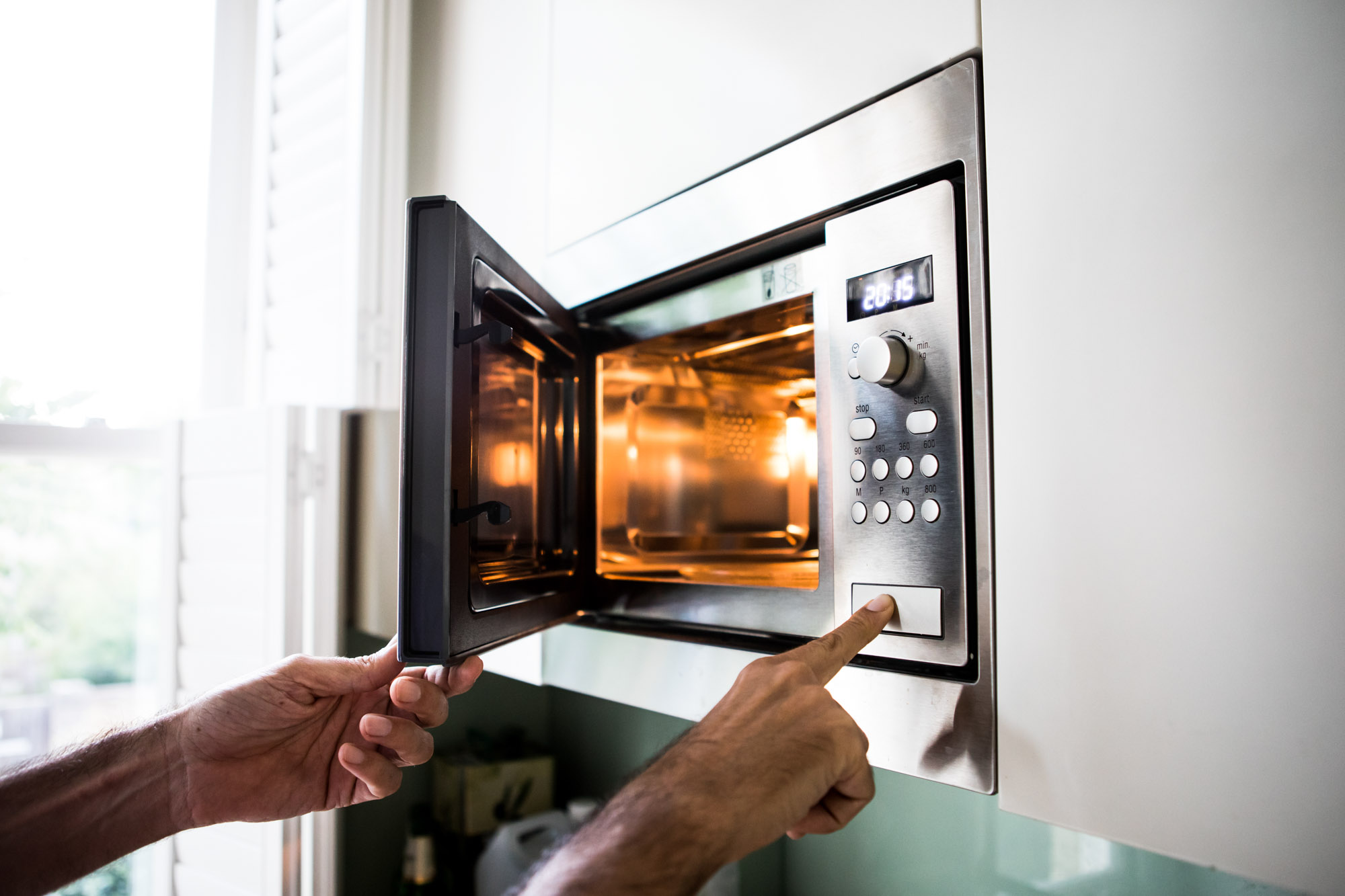
With the ULSE Data Science & Engineering team’s help, the task group proposed additional requirements for microwave ovens as a proposal to TC 923 in August 2018 in addition to the existing testing requirements for temperatures achieved, safe wiring, insulation, thermal cutoffs, circuit protection, cavity fire containment, and radiation emission tests. The new requirements mandated that microwave ovens must use a two-step door-opening mechanism requiring two distinct user actions. For instance, the user may slide a switch while pulling a handle at the same time or twisting a handle while pushing a button at the same time.
Ovens with touch controls require two distinct actions: touching two different touch pads, but not the same touch pad twice meets the intent of the requirement. Any input would also cancel after 10 seconds to reset the panel to avoid accidental opening. If multiple methods were available to open the door, then each would need to meet the two-step requirement.
The oven must not move when the door is pulled with 10 pounds of force, ensuring that the door will remain locked without the two-part sequenced opening procedure, and that a strong pull will not cause the entire oven to fall down onto a child.
To make sure these requirements would not interfere with normal use by persons with limited hand mobility, manufacturers may provide a way to convert the door to a single-action opening, but only if the user uses a tool or enters a specific code consisting of a sequence of three distinct key presses to prevent children from disabling the mechanism.
A new door handle force test was proposed to confirm that a microwave meets these requirements and does not pull the entire microwave off a counter.
On September 17, 2018, the panel voted to pass the measure, which requires child-resistant doors for all new microwave ovens made after 2023. The new version of UL 923 provides a clear scope excluding built-in, wall-mounted, commercial, or drop-door microwave ovens, based on the evidence gathered about countertop and swing-door ovens creating the greatest threat. Safety labels have been added, and instructions for disabling the two-step opening mechanism are included with ovens.
A standard is a critical tool for ensuring global problems are addressed through iterative, collaborative problem-solving.
This is just a small recap, and you are encouraged to view the standard, in full, for free, by creating an account at ShopULStandards.com and using the Digital View feature.
How to get involved
Share your expertise
UL Standards & Engagement is actively seeking all interested parties to participate in its standards development process and encourages diverse perspectives to join in by participating as a stakeholder. Stakeholders can submit, review, and comment on proposals for new standards or revisions to existing standards. While stakeholders do not vote, the TC considers their input during the standards voting process. Since standards affect everyone, all are welcome to participate as stakeholders. Register online through ULSE’s Collaborative Standards Development System.
Advance your career
Check out current internship and fellowship openings for opportunities to engage with standards professionals and to contribute to standards research and innovation.
Discussion Questions
- Six years passed between the doctors’ first proposal for a two-part door-opening mechanism and UL 923’s adoption of a two-part door-opening mechanism. Debate the tradeoffs between waiting to adopt until the proposal is fully justified and guarded against unintended consequences versus the safety risks of not implementing the standard sooner.
- How does validating an engineering design or product compare to proposing a safety standard?
- What is the role of “solid data” in safety standard development and consumer safety regulations? By what means can producers ensure that their products are adequately safe without undue burden or overkill?
- Who is responsible for ensuring microwaves are safe and used responsibly: the parent/guardian, the manufacturer, the installer, or the regulator?
Glossary
- Split-thickness skin grafts
Shaved dermis layers from a donor site cover a burned site allowing it to heal.
- ULSE’s Collaborative Standards Development System protocol
An online tool for jointly developing and improving safety standards
References
Crowe, C. S., Massenburg, B. B., Morrison, S. D., Naghavi, M., Pham, T. N., & Gibran, N. S. (2019). Trends of burn injury in the United States: 1990 to 2016. Annals of Surgery, 270(6), 944–953. https://doi.org/10.1097/SLA.0000000000003447
Robinson, M. R., O’Connor, A., Wallace, L., Connell, K., Tucker, K., Strickland, J., Taylor, J., Quinlan, K. P., & Gottlieb, L. J. (2011). Behaviors of young children around microwave ovens. Journal of Trauma: Injury, Infection & Critical Care, 71(5), S534–S536. https://doi.org/10.1097/TA.0b013e31823a4d42
Lowell, G., Quinlan, K., & Gottlieb, L. J. (2008). Preventing unintentional scald burns: Moving beyond tap water. Pediatrics, 122(4), 799–804. https://doi.org/10.1542/peds.2007-2979
McLoughlin, E. (1990). The causes, cost, and prevention of childhood burn injuries. Archives of Pediatrics & Adolescent Medicine, 144(6), 677. https://doi.org/10.1001/archpedi.1990.02150300075020
Lowell, G., & Quinlan, K. (2016). Not child’s play: National estimates of microwave-related burn injuries among young children. Journal of Trauma and Acute Care Surgery, 81(4), S20–S24. https://doi.org/10.1097/TA.0000000000001050
Quinlan, K. P., Lowell, G., Robinson, M., Musso, J., & Gottlieb, L. J. (2021). Making Microwave Oven Doors Child Resistant to Protect Young Children From Severe Scalds. Pediatrics, 147(2), e2020021519. https://doi.org/10.1542/peds.2020-021519