- UL 2904
From Filaments to the Future: Fusing Human Health and 3D Printing Innovation with Safety Standards
UL 2904, the Standard Method for Testing and Assessing Particle and Chemical Emissions from 3D Printers, is a safety standard that provides a testing and assessment method for measuring particles and chemical emissions from 3D printers.
Abstract
Three-dimensional (3D) printing is considered a driver of “the third industrial revolution” due to its rapid prototyping, cost-effective manufacturing, complex designs, and customization capacities. As 3D printer use has become increasingly budget- and user-friendly, the technology is more readily available in non-commercial settings, such as homes, offices, and educational spaces. However, research has shown that 3D printers emit ultrafine particles and volatile organic compounds that can degrade indoor air quality and could pose human health risks, including headaches, irritation to the eyes, nose, and throat, and more serious respiratory and cardiovascular issues. In response to these health concerns, UL Standards & Engagement published ANSI/CAN/UL 2904, the Standard Method for Testing and Assessing Particle and Chemical Emissions from 3D Printers. ANSI/CAN/UL 2904 is a first-of-its kind safety standard developed to evaluate and limit the indoor air pollutants that 3D printers can generate. The standard describes a multi-phase protocol to assess emission rates and potential exposure levels from 3D printers and offers guidelines on best practices for printer and print feedstock selection, installation location, and ventilation options to help reduce the health risks associated with 3D printers. By establishing criteria for 3D printer emissions, ANSI/CAN/UL 2904 supports innovation while helping to protect human health and indoor air quality.
Learning Objectives
- Understand that 3D printing is an additive manufacturing technology that supports innovative and creative advancements across industries
- Identify current 3D printing activities at school and in the community
- Analyze how consumers can apply standards to make informed decisions about 3D printing options
- Evaluate how standards can support technological advancements while also keeping people and communities safe


Real-world context
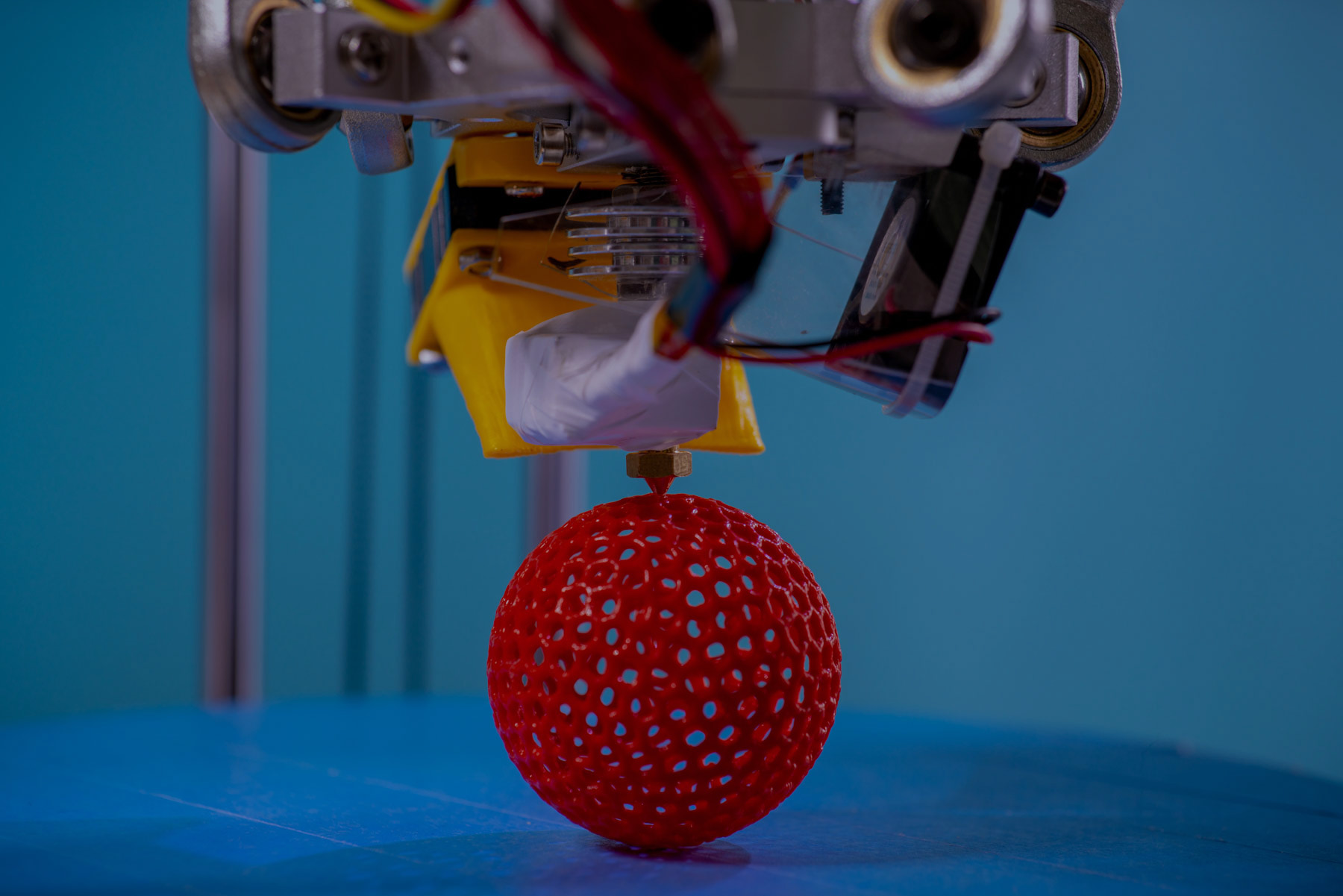
3D printing enables on-demand manufacturing of custom parts and prototypes across industries.
But there are risks
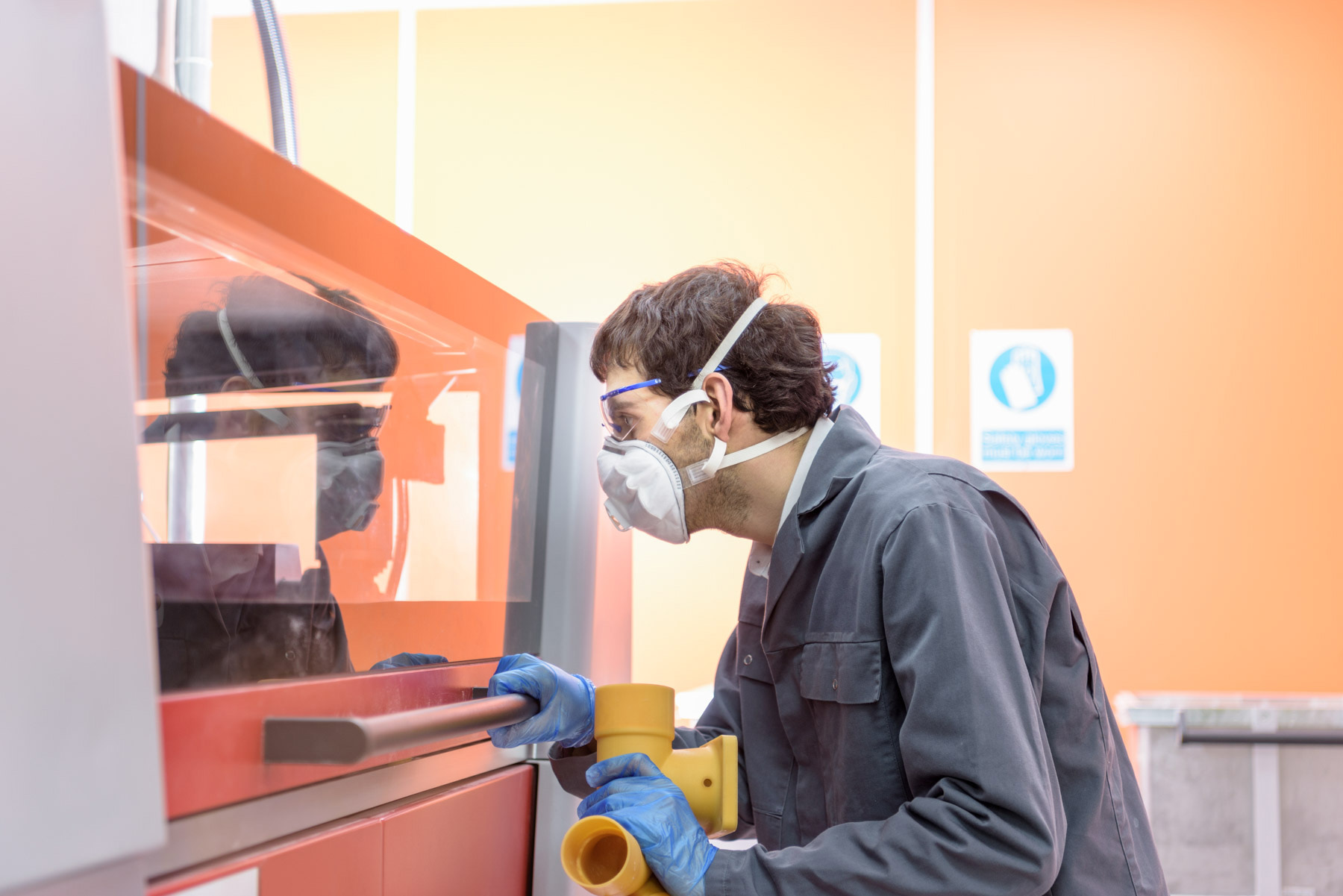
3D printing with thermoplastic materials releases ultrafine particles and volatile organic compounds, which can cause respiratory and cardiovascular issues.
For example
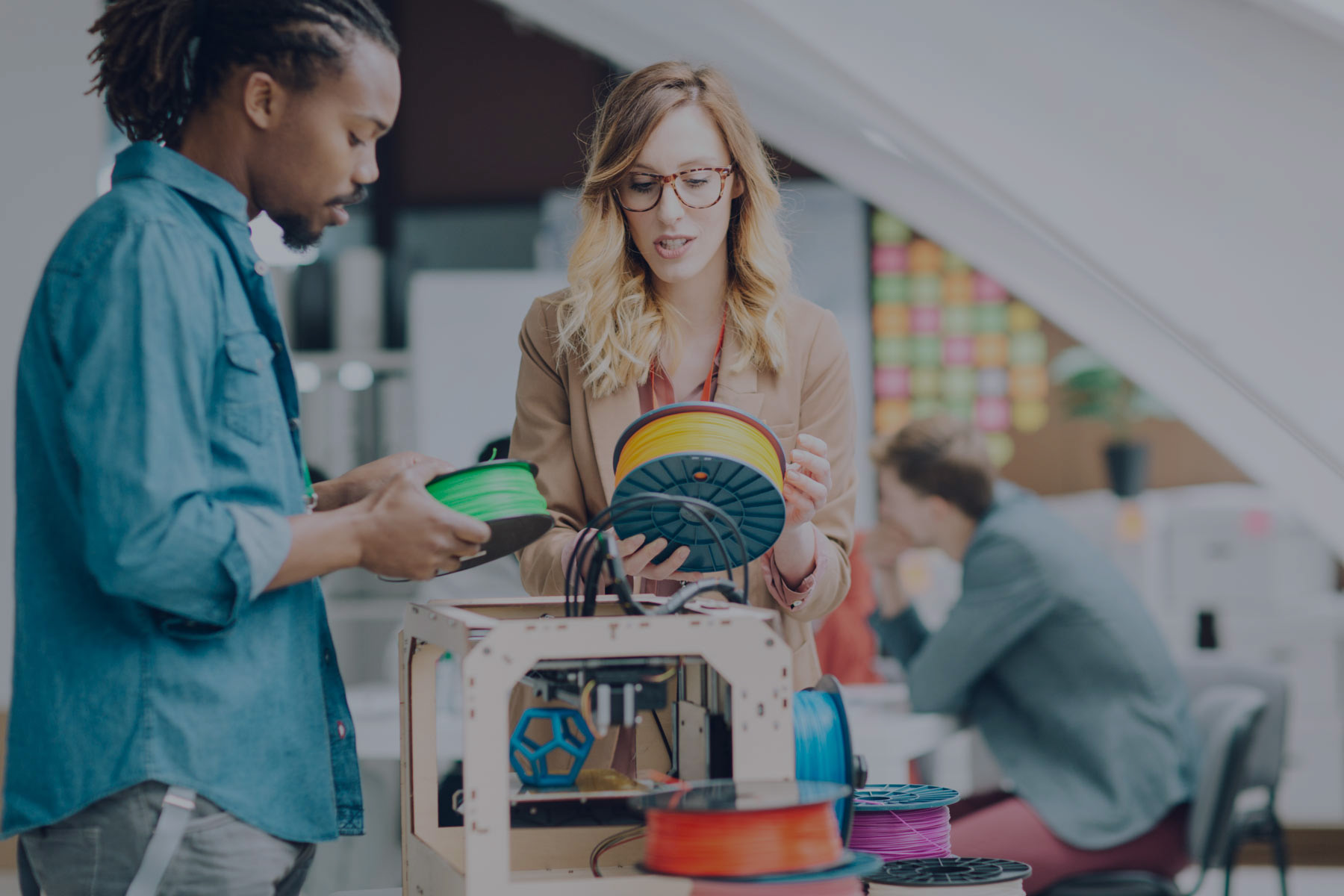
In 2023, researchers from the Chemical Insights Research Institute found that 3D printer emissions in an open-concept university makerspace resulted in elevated levels of indoor air pollutants 1.

How can we support 3D printer technological advancement and innovation while helping to protect human health?
Background
During a 2012 bomb attack on his village in southern Sudan’s Nuba Mountains, then 14-year-old Daniel Omar took cover and wrapped his arms around a tree. While the tree offered enough protection to help him survive, the blast injured his exposed arms, requiring both to be amputated. Like Daniel, many individuals in war-torn countries have lost limbs during attacks, but do not have access to affordable prosthetics. In response, Not Impossible Labs launched “Project Daniel” 2, creating low-cost three dimensional (3D)-printed prosthetic limbs for amputees in the Sudan region.
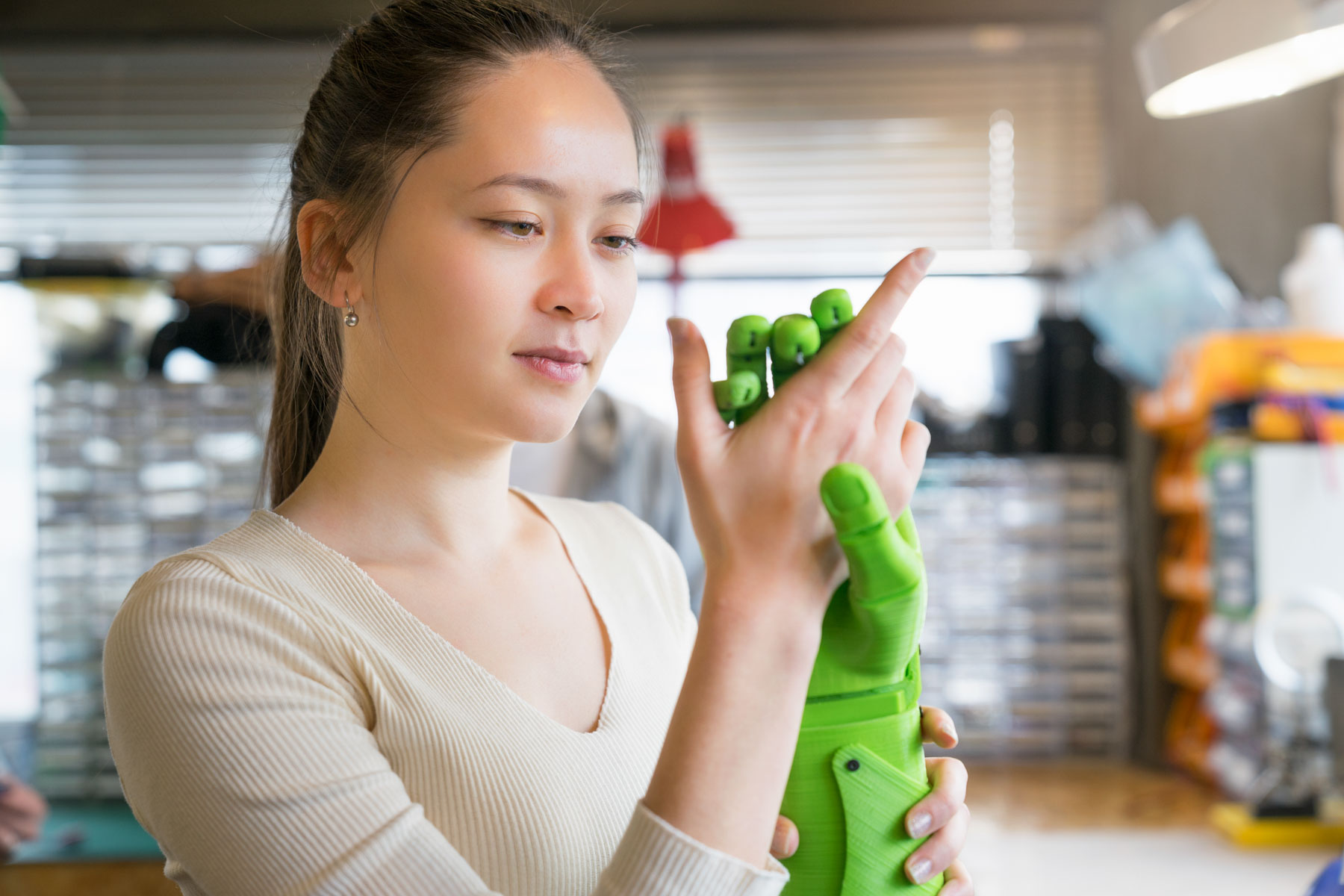
Any 3D-printed object, even 3D-printed prosthetic limbs like those produced by Not Impossible Labs, begins with a digital design, typically created using computer-aided design (CAD) software. The software then translates the design into a layered framework that tells the 3D printer what to produce. These printers can make use of any material that can be joined together. Currently, common print materials include polymers, metals, ceramics, foams, gels, and biomaterials, with the three most common types of 3D printers being filament-based, resin-based, and powder-based. Some setups make use of a nozzle that will spray the print material, while others involve the use of lasers or electron beams to melt or sinter the print material together 3.
The simplicity of a 3D print setup is one of the main benefits of additive manufacturing, which creates a product by joining materials together, often layer by layer 4, and allows for a much faster and less expensive route to product creation. Traditional, or subtractive, manufacturing, which creates a product by cutting away at a solid material, typically requires high volume production to see a return on investment; however, the low cost of 3D printing means small volume production is possible, even allowing for customization. Additive manufacturing is also associated with reduced raw material requirements, lower energy needs, and minimal waste 3.
The many advantages of additive manufacturing, which is considered a key driver of “the third industrial revolution” 5, are why 3D print technology is now widely used in a variety of industries, including electronics, architecture, medicine, dentistry, aerospace and defense, automotive and manufacturing industries, consumer products, arts, education, and entertainment 6. Furthermore, advances in 3D printer design to be more compact, affordable, and user-friendly have made them a valuable tool in non-industrial environments, such as office, residential, and educational settings, increasing access for the public — in fact, the desktop 3D printer market, which was valued at $6 billion in 2024, is predicted to exceed $20 billion by 2030 7.
Question
Where are the 3D printers in your community? What are they being used to print?
Problem
By January 2014, Daniel Omar, then 16 years old, had not been able to feed himself since the loss of his hands. After being fitted with the 3D-printed prosthetic arm created by Not Impossible Labs, he picked up a spoon for the first time in two years. Daniel’s story is one of many that highlights how 3D printing is important to advance innovation. Despite the many benefits of 3D printers, including advancements in medical fields, this technology also poses potential risks to human health by releasing ultrafine particles (UFPs), which are less than 100 nanometers in size 8, and volatile organic compounds (VOCs) 9 into the air during printer operation.
The release of such pollutants can negatively affect indoor air quality, and human exposure could lead to adverse health impacts, particularly for individuals with conditions such as asthma. Data indicate that more than 200 different VOCs, many of which are known or suspected irritants and carcinogens, can be released while 3D printers are in operation 9, and 3D printer emissions may contribute to cellular damage, inflammation, and harm to DNA 10. Recent research has even shown that emissions from filament printing, the most common type of 3D printing, can play a role in stimulating inflammatory responses that could contribute to the progression of pulmonary fibrosis and chronic obstructive pulmonary disease (COPD) 11.
Filament-based 3D printers use a technique called fused filament fabrication (FFF), where a filament made of different kinds of thermoplastics is extruded through a heated nozzle that moves along a print bed, depositing the material in layers. Research shows that many components of these 3D printers, including nozzle temperature, filament type, filament and printer brand, and filament color, can affect emissions. Of these components, those found to have the greatest impact on emission levels were extrusion temperature, filament material, and filament brand 12. Other variables that affect indoor concentrations of printer emissions include room conditions, such as ventilation and occupancy 13, and the number of 3D printers in use in the space. Spaces with multiple 3D printers, like makerspaces and other types of academic settings, are known to have increased concentrations of UFPs and VOCs due to a cumulative effect wherein each device contributes emissions to the overall pollutant load in the room 14, 15.
Though research on 3D printer emissions continues to grow and inform our understanding of potential health impacts, there is currently little information available to help users mitigate their risks by choosing safer options or creating safer conditions in 3D printing spaces.
Question
How should universities and colleges balance the benefits of providing access to 3D printing technology with their efforts to provide a safe learning environment for students and staff? What safety protocols should be in place?
Approach
In February 2017, participants of a 3D printing and indoor environment leadership summit held in Atlanta, Georgia discussed additive manufacturing techniques and ongoing scientific research on pollutant releases and human health. The concerns that surfaced from these conversations led to the development of the proposed first edition of UL 2904, the Standard Method for Testing and Assessing Particle and Chemical Emissions from 3D Printers. Later that same year, in October 2017, the proposed first edition of UL 2904 was made available for preliminary review and commenting. Over the next two years, Technical Committee (TC) 2904 worked to revise and improve the initial proposal, resulting in publication of the first edition of UL 2904 on January 31, 2019.
As of 2025, members of TC 2904 consist of 39% general members, 26% government representatives, 13% producers, 9% supply chain members, 9% testing and standards organization members, and 4% commercial industrial users. TC 2904 worked together on subsequent proposals for updates to the first edition of UL 2904 throughout 2022 and 2023, eventually coming to consensus to publish the second edition of the standard on May 26, 2023.
Question
How would the perspectives of a supplier, an engineer, a manufacturer, and a customer on a technical committee vary with respect to their priorities around 3D printing technology?
Solution
UL 2904 presents measurement and assessment protocols regarding the characterization and quantification of particulate matter and VOCs which result from operating 3D printers typically found in schools, offices, libraries, homes, and other non-industrial indoor spaces. These methodologies are intended to mitigate indoor air pollution hazards that can be introduced by this type of product. Users of 3D printers successfully tested to UL 2904 have the assurance that they meet emission criteria.
Test method and analysis
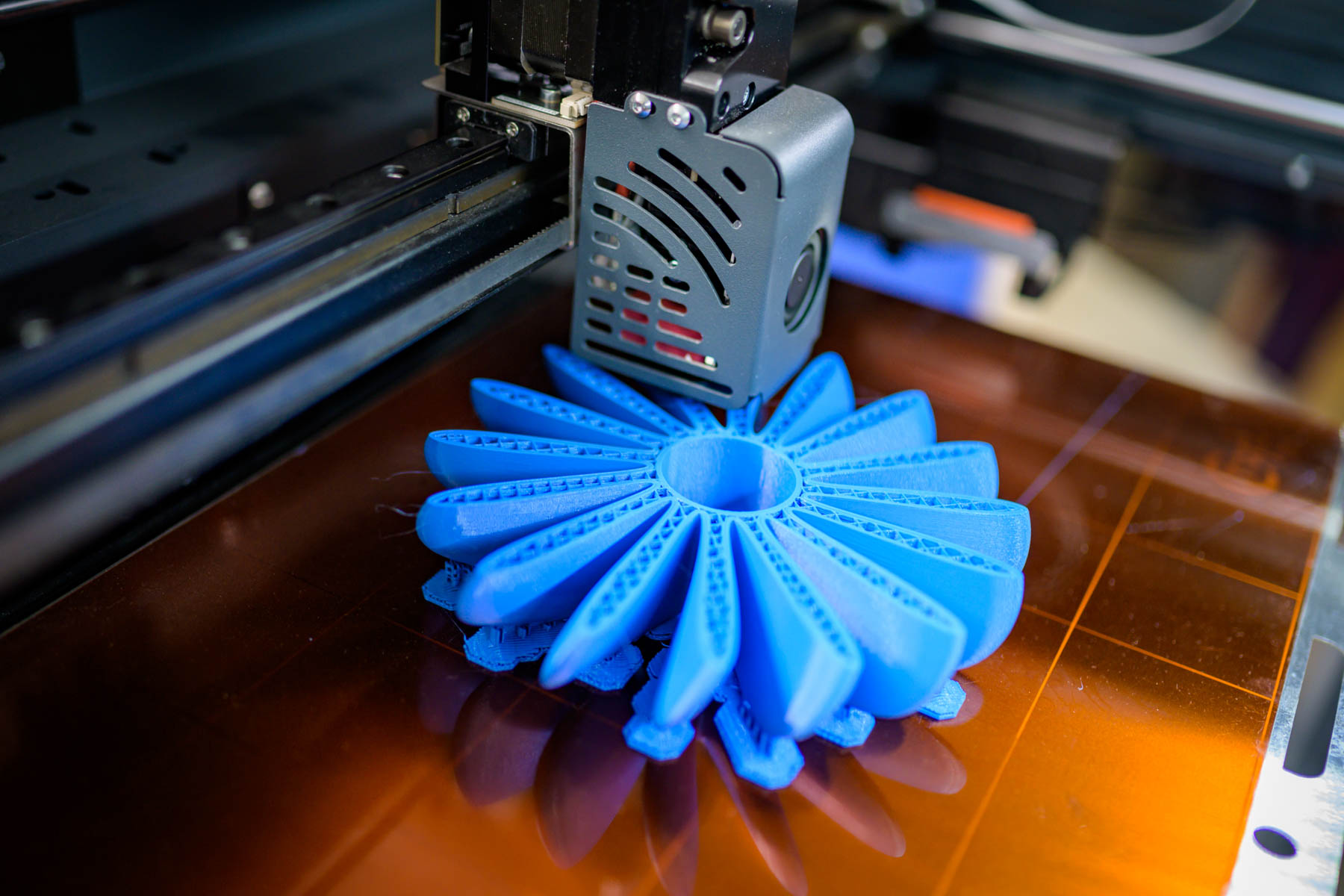
The method to collect particle and VOC measurements from a 3D printer outlined by UL 2904 consists of three phases spread out over three days:
- Day 0 – Preparation phase: The process begins by unpackaging the test printer and feedstock, cleaning the stainless-steel environmental test chamber and the test printer (if not new), as well as preparing and confirming operability of the test printer system outside the test chamber.
- Day 1 – Pre-operating phase: After the test chamber has been purged overnight for at least eight hours, the pre-operating phase begins. Empty chamber chemical and particle background samples are collected, the test printer and feedstock are loaded in the chamber, and the printer is powered on.
- Day 2 – Printing and post-operating phase: Following an overnight equilibration period of at least eight hours, the sampling process moves into the final phase. Particle background samples are collected and then the object is printed. Particles are monitored before, during, and after the printing process, and chemical samples are collected during printing.
Once measurement and collection have concluded, the data is then analyzed to determine the particle and VOC emission rates of the test printer.
Evaluation of emission rates
Evaluation of a test printer’s emission rates for compliance with UL 2904 is completed by comparing its measured particle and VOC values to the maximum allowable values specified by the standard. These maximum allowable values are derived from different sources. Particle emission rate criteria are based on research data developed from the Georgia Tech research measurement database, while VOC emission rate criteria are based on exposure limits set by organizations such as the American Society of Heating, Refrigerating, and Air Conditioning Engineers (ASHRAE), as well as exposure modeling. Using specific indoor models, this part of the method is designed to mimic real-world environments (e.g., an office setting, a classroom, a residential setting) with defined parameters, including room size, ventilation rates, and number of printers. These criteria are then used to determine whether a printer and its print materials meet a “pass/fail” threshold.
Although UL 2904 is currently a voluntary standard and not a legally-binding, government-mandated regulation, it is still considered useful in assessing product safety. In fact, the assessment of emission rates and exposure concentrations specified by this standard provides the foundation for GREENGUARD Certification, which is awarded to non-industrial 3D printers and printing materials that demonstrate emissions below the limit set by UL 2904. GREENGUARD Certification acts as an indicator to purchasers that a product supports good indoor air quality.
Safety support for today and the future
Beyond specifying maximum allowable particle and VOC emission rates for 3D printers, UL 2904 also addresses other elements of 3D printing. Its new materials assessment outlines emerging print materials, such as composites, flame retardants, and flexible filaments that may differ from current feedstocks in ways which can influence emissions. The standard also suggests best practices to help users minimize indoor air pollution risks during pre-printing, printing, and post-printing processes. This guidance includes considerations to keep in mind during printer selection, installation, operation, maintenance, storage, and disposal, such as using filaments that print at lower extrusion temperatures, incorporating adequate ventilation and filtration measures into print spaces, and limiting observation time during printing.
3D printing technology is an important part of modern innovation due to its role in accelerating product prototyping, design, and development across a wide range of industries. UL 2904 plays an important role in supporting continued innovation by giving manufacturers and users assurance that tested printers and print materials have been evaluated against objective, research-based data and meet emission criteria. In doing so, this standard helps consumers make informed purchasing decisions that support human health and safety.
Discussion Questions
- Dysphagia, or difficulty swallowing, is a challenge experienced by many people, including those with neurological conditions such as stroke, Parkinson’s disease, or multiple sclerosis, as well as those with muscle restrictions. 3D-printed foods are a new technology that can be tailored to offer distinct textures, shapes, and moisture conditions for those who experience dysphagia. However, a standard for 3D-printed foods does not exist at the time of writing. If you were a member of a Technical Committee tasked with developing the first standard for 3D-printed foods, what topics would you want to include in the standard to ensure the technology could advance while maintaining consumer safety?
- On a global scale, 3D printing is sometimes referred to as a “disruption” because it introduces changes to traditional supply chains by enabling local production of goods and reducing reliance on long-distance shipping. From an economic and sustainability perspective, what are the positive impacts and potential challenges of further advancing this technology? Should the future of manufacturing include a greater or lesser focus on additive processes?
- What technological innovations could help make 3D printing more sustainable and less hazardous? Consider advancements in materials science, air filtration, and printer design.
A standard is a critical tool for ensuring global problems are addressed through iterative, collaborative problem-solving.
This is just a small recap, and you are encouraged to view the standard, in full, for free, by creating an account at ShopULStandards.com and using the Digital View feature.
Glossary
- Additive manufacturing
The process of building an object one layer at a time; also known as 3D printing.
- Feedstock
3D printer media fed into the printer to create a printed object.
- Makerspace
A place in which people with shared interests can gather to work on projects while sharing ideas, equipment (such as 3D printers), and knowledge.
- Subtractive manufacturing
A process where material is removed from a solid block, commonly using tools such as cutters, drills, and lathes, to create a desired shape or final product.
- Thermoplastic
A plastic polymer substance that softens or becomes moldable when heated and then solidifies upon cooling.
- Ultrafine particles (UFPs)
Particles having an aerodynamic diameter less than or equal to 0.1 μm. In UL 2904, the minimum size of UFPs is instrument dependent, typically below 10 nm.
- Volatile organic compounds (VOCs)
Compounds with the potential to evaporate under normal indoor atmospheric temperature and pressure conditions. In UL 2904, VOCs refer to organic compounds having an initial boiling point less than or equal to 250 °C (at minimum including n-hexane to n-hexadecane) measured at a standard atmospheric pressure of 101.3 kPa.
References
- Chemical Insights Research Institute (2023). Technical Report: The Impact of 3D Printing on Indoor Air Quality in a University Maker Center, Underwriters Laboratories Research Institutes. https://chemicalinsights.org/wp-content/uploads/2023/05/Chemical-Insights_3D-Makerspace_Technical-Report_Final.pdf
- Not Impossible Labs (n.d). “Project Daniel,” https://www.notimpossible.com/projects/project-daniel, Not Impossible Labs, LLC. Accessed 9 September 2025.
- Huang, S. H., Liu, P., Mokasdar, A., Hou, L. (2013). Additive manufacturing and its societal impact: A literature review. International Journal of Advanced Manufacturing Technology, 67, 1191 – 1203. https://doi.org/10.1007/s00170-012-4558-5
- ASTM (2010). Standard Terminology for Additive Manufacturing Technologies, F2792-12a, https://web.mit.edu/2.810/www/files/readings/AdditiveManufacturingTerminology.pdf. Accessed 21 May 2026.
- The Economist. (2012, April 21). The third industrial revolution. The Economist. https://www.economist.com/leaders/2012/04/21/the-third-industrial-revolution
- Chemical Insights Research Institute (2026). 3D Printer Safety: A Guide for Supporting Indoor Air Quality & Human Health. UL Research Institutes. Report. https://doi.org/10.60752/102376.32802884
- Grand View Research (2024). Desktop 3D Printing Market (2025-2030). https://www.grandviewresearch.com/industry-analysis/desktop-3d-printing-market-report
- Zhang, Q., Wong, J. P. S., Davis, A. Y., Black, M. S., & Weber, R. J. (2017). Characterization of particle emissions from consumer fused deposition modeling 3D printers. Aerosol Science and Technology, 51, 1275–1286. https://doi.org/10.1080/02786826.2017.1342029
- Davis, A. Y., Zhang, Q., Wong, J. P., Weber, R. J., & Black, M. S. (2019). Characterization of volatile organic compound emissions from consumer level material extrusion 3D printers. Building and Environment, 160, 106209. https://doi.org/10.1016/j.buildenv.2019.106209
- Chemical Insights Research Institute (2022). Final Report: Dosimetric and Toxicological Analysis of 3D Printer Emitted Particles. Underwriters Laboratories Research Institutes, https://chemicalinsights.org/wp-content/uploads/2022/12/Chemical-Insights_3D-Toxicity-Report_final.pdf. Accessed 9 September 2025.
- He, X., Barnett, L. M., Jeon, J., Zhang, Q., Alqahtani, S., Black, M., Shannahan, J., & Wright, C. (2024). Real-time exposure to 3D-printing emissions elicits metabolic and pro-inflammatory responses in human airway epithelial cells. Toxics, 12(1), 67. https://doi.org/10.3390/toxics12010067
- Black, M., Davis, A., Zhang, Q. (2020). 2019 Annual Summary Report: 3D Printer Emission Research. Underwriters Laboratories Research Institutes, Chemical Insights Research Institute. https://chemicalinsights.org/wp-content/uploads/2020/05/2019-3D-Printing-Annual-Report.pdf. Accessed 9 September 2025.
- Chemical Insights Research Institute (2024). The Impact of 3D Printing on Indoor Air Quality in Educational Settings (Version 1), Underwriters Laboratories Research Institutes, https://doi.org/10.60752/102376.28030031.v1
- Chan, F. L., Hon, C. Y., Tarlo, S. M., Rajaram, N., & House, R. (2020). Emissions and health risks from the use of 3D printers in an occupational setting. Journal of Toxicology and Environmental Health. Part A, 83(7), 279–287. https://doi.org/10.1080/15287394.2020.1751758
- Peterson, J., Dyrdahl, K., & Bruss, S. (2022). Occupational exposure and indoor environmental quality evaluation from operating multiple desktop 3D printers in an office environment within a library. International Journal of Academic Makerspaces and Making. https://doi.org/10.21428/70cb44c5.304ca1a6