- UL 3600
Empowering Organizations to Measure and Report on Circularity
Companies sometimes falsify their green claims (i.e., claims that a product, system, or service truly prioritizes the well-being of people and planet) or mislead customers with flashy buzzwords. UL 3600, the Standard for Measuring and Reporting Circular Economy Aspects of Products, Sites and Organizations, is a comprehensive standard aimed at reducing greenwashing by increasing organizational transparency in measuring and reporting on circular economy efforts that drive real sustainability impacts.
Abstract
Circularity is a vital solution to the environmental and economic challenges of traditional linear supply chains. Engineers, designers, scientists, managers, and many other roles are pivotal in implementing circular economy principles to reduce waste, reuse materials, and regenerate natural resources. This case study focuses on increasing organizational transparency by highlighting UL 3600, the Standard for Measuring and Reporting Circular Economy Aspects of Products, Sites and Organizations, the first comprehensive standard for measuring and reporting a company or organization’s sustainability efforts, specifically those related to circular economy, such as eliminating waste, reusing materials, and regenerating natural resources. This standard provides a framework for quantifying material flows, assessing product and site circularity, and addressing social impact factors.
Through conformance to UL 3600, organizations can be transparent with their sustainability efforts, create sustainability targets that are supported by data, and communicate their progress to stakeholders and consumers. Discerning genuine corporate sustainability efforts from greenwashing can be challenging. UL 3600 empowers consumers, engineers, and changemakers to make decisions about their role in sustainability by creating a real-world framework that can be used to measure and communicate sustainability efforts. The case study examines the potential impact of UL 3600 through a use-case example of student-led campus sustainability efforts in dining halls and helps students and all learners communicate progress toward real sustainable change.
Learning Objectives
- Define, understand, and communicate the principles of circularity and its application in engineering design
- Analyze the environmental and economic benefits of implementing circular economy principles in various engineering disciplines
- Consider innovative circular solutions to real-world engineering problems
- Define and identify greenwashing
- Understand the importance of organizational transparency
- Explore the role of UL 3600 in combating greenwashing and understand the potential impacts of UL 3600 in driving a more sustainable and safer future


Real-world context
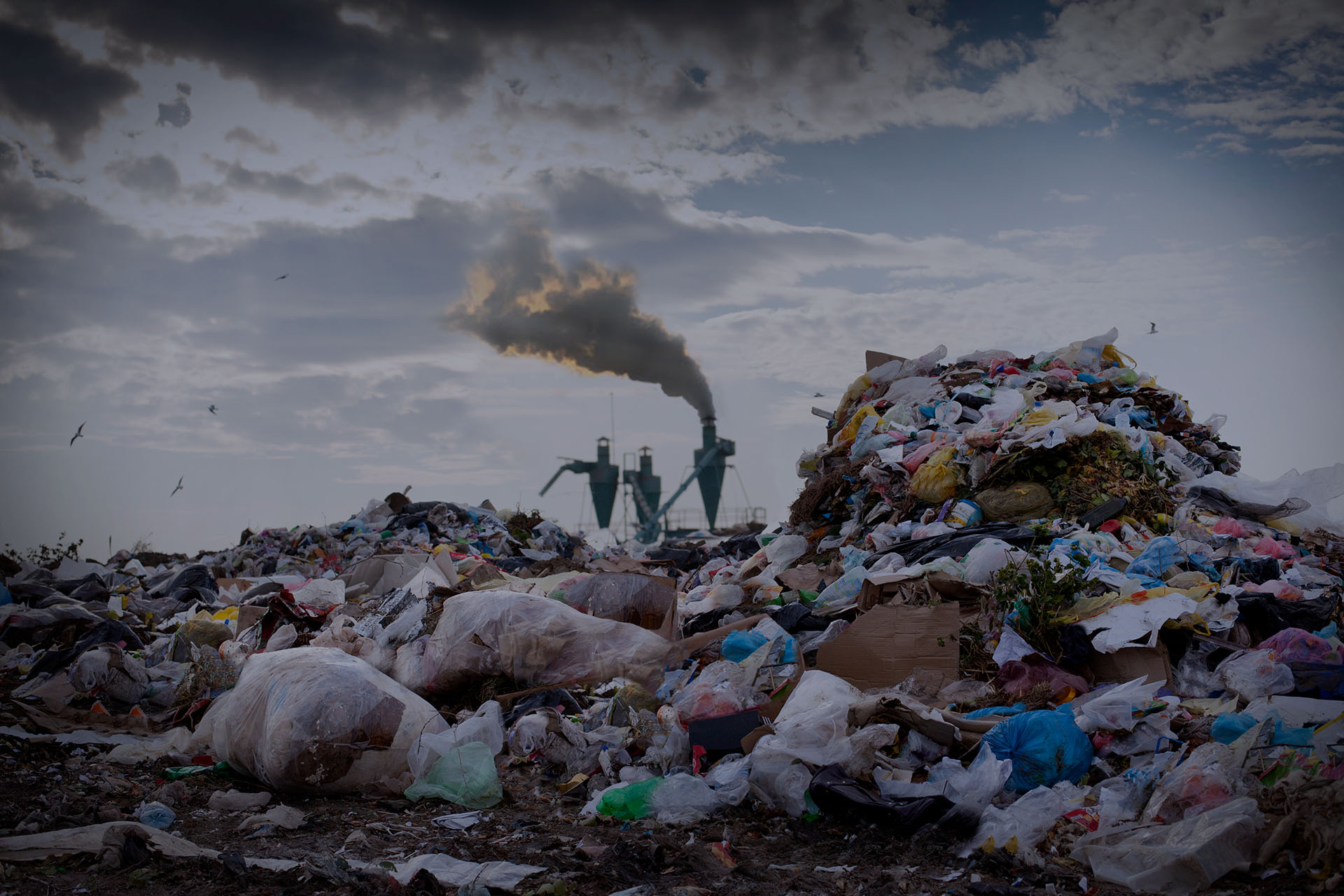
Biodiversity is declining, millions of tons of plastic are ending up in our oceans, and temperatures are continuing to increase, yet our earnest efforts to support “green” companies potentially have little real-world impact.

But there are risks
Many organizations claim they are sustainable, green, or eco-friendly, but how can we know for certain?
For example
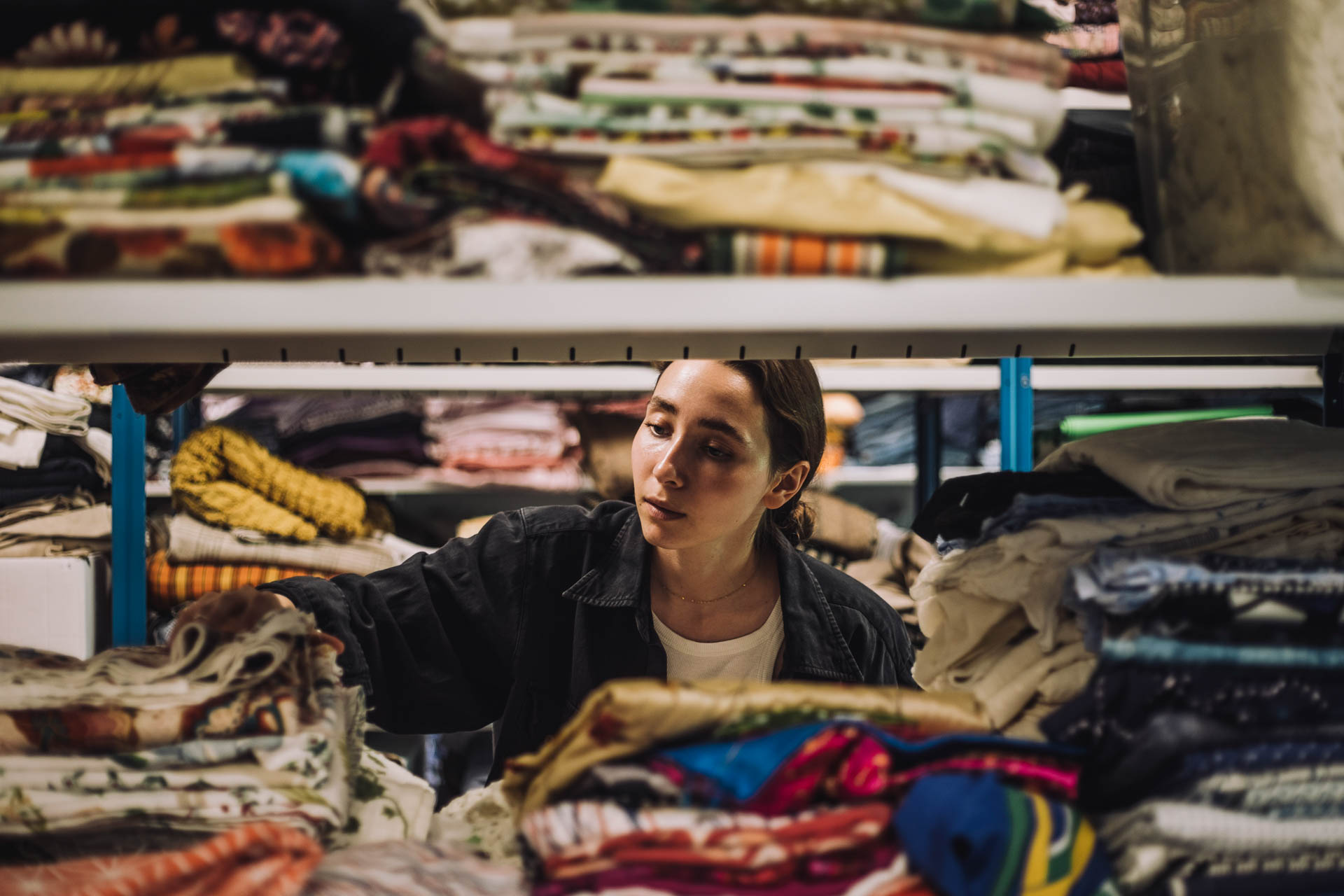
Once textiles (e.g., clothing and footwear) are discarded, there is a high likelihood that the item will end up in a landfill rather than being recycled. It is estimated that only about 15% of textiles are recycled.1

What actionable steps can be taken to increase organizational transparency toward sustainability, reduce resource extraction, and lead to positive changes globally?
Background
In a fully sustainable world, every product you purchase is designed to be part of a continuous loop — one in which materials are reused, repaired, and recycled, minimizing waste and environmental impact at all levels of the supply chain. This includes all raw materials extracted from the Earth to products at the end of their initial life being reimagined and reused, and every step throughout this cycle.
Sustainability is a term we hear about frequently: politicians are championing sustainability causes in communities, businesses are launching campaigns purporting themselves as sustainability champions, and products are marketed as better and more sustainable than their competitors. Often, the word “sustainable” can be a synonym for the word “good” in product marketing. According to the U.S. Environmental Protection Agency, 2 sustainability is based on the principle that everything that we need for our survival depends on our natural environment, and that to pursue sustainability is to create and maintain conditions that balance human impacts on nature to coexist in harmony.
Engineers have an important job of solving many of the problems associated with supply chains — supply chains traditionally are very linear, characterizing a “take-make-dispose” pathway, which is proving to be unsustainable in the long term. The ongoing consumption of raw resources coupled with the resulting vast amount of waste has placed a significant strain on the environment. For example, the International Resource Panel 3 suggests that resource extraction and processing is the cause of more than 90% of biodiversity loss. As more organizations seek to promote sustainable practices as a core component of their business model, sustainability, as a term, runs the risk of becoming seen as a marketing claim more than anything else. Many companies are eager to display their eco-credibility. This often takes the form of programs around recyclability or carbon offsets, engineering efficiencies into their supply chains to reduce raw material consumption, or modifying repair and reuse policies. The reality is that greenwashing — when companies advertise incorrect or generic environmental claims about a product or service — has happened and can continue to occur. How can we as professionals, engineers, and sustainably minded consumers recognize and evaluate consumer-environmental claims?
To counteract these pressing concerns, the concept of the circular economy has evolved as a promising alternative, offering a fundamental shift toward a more sustainable and regenerative approach. Sitra, the Finnish Innovation Fund, suggests biodiversity loss could be halted by adopting circular economy principles, and even recover to millennium levels by 2025. 4 This shift in mindset presents an opportunity to develop innovative solutions that align with circular economy principles.
Greenwashing can take many forms. Organizations may use generic statements like “green” or “eco-friendly” to help advertise and market their products, but more nuanced forms of greenwashing can be more difficult to detect. These greenwashing practices not only hurt the consumer and planet by not valuing sustainable practices, but the reputation of the organization and subsequent environmental efforts by eroding trust. In 2015, to provide clear guidelines and combat greenwashing, the United Nations adopted the Sustainable Development Goals in its 2030 Agenda for Sustainable Development.5 Research by Ortiz-de-Montellano et al. 6 suggests circular economy principles can be adopted in all 17 SDGs and all 169 targets.
Consumers are demanding transparency from companies regarding their environmental impact and want to know the whole story behind the products they purchase, often from cradle to cradle (from raw material sourcing and creation to how the product is recycled).
Bonacorsi 7 argues circular economies eliminate waste and pollution, keep products and materials moving in a circular supply chain, and will regenerate natural resources. Accurately measuring circularity has long been a goal in ensuring efforts are being made toward increasing sustainability. But how can organizations accurately measure, report out, and increase their efforts toward circularity? To help alleviate these concerns about a lack of transparency, UL Standards & Engagement published UL 3600, the Standard for Measuring and Reporting Circular Economy Aspects of Products, Sites and Organizations, to provide a comprehensive set of metrics and criteria for evaluating and reporting on how companies are contributing to sustainable practices. By using the metrics set in UL 3600, companies can demonstrate their commitment to sustainability in a transparent, quantifiable, and trustworthy way.
Question
Consider a time when you were unsure about marketing claims regarding sustainability — what did you notice? What are some questions you had when evaluating these claims?
Imagine you are an engineer designing furniture for college campuses (e.g., dorms, offices, and other places that need furnishing). Which areas within your work could be improved by increasing circularity? How might you try to increase circularity within this industry? Provide a few examples.
Problem
The prevalence of greenwashing makes it difficult for consumers to make informed choices about products and services they choose to engage with. Aside from deceiving consumers, these dishonest practices overshadow real sustainability efforts. And while there are many benefits of transitioning toward a more circular economy, there are also challenges. Mindsets at many levels of the industry and consumer levels need to be shifted, innovative design principles need to be engineered, and collaborations across all levels of the economy must be fostered.
On a societal level, greenwashing by companies can lead to disengagement and cynicism. How do future problem-solvers contribute to a more honest and sustainable economic model? There is a lack of a unified framework for measuring circularity, which is a significant roadblock to progress. Without a clear understanding of how to quantify circularity, organizations struggle to set meaningful targets or report their value in sustainability efforts. This lack of standardization also impacts engineers working in many fields, as it becomes more difficult to design products and processes with circularity as a guiding principle. Performance in sustainability is tricky to track without standardized reporting metrics, and communication with consumers is impacted through this ambiguity. Additionally, as an organization seeking to differentiate themselves in a complex market, comparison between similar organizations toward goals around sustainability is difficult to measure.
Question
What role(s) might engineers play in solving problems caused by linear economies? What problems can you see yourself helping solve related to sustainability and circularity? What are some challenges that organizations might face in trying to measure their circularity performance?
Approach
UL 3600, the Standard for Measuring and Reporting Circular Economy Aspects of Products, Sites and Organizations, allows consumers and companies to address the problem of greenwashing through standardization and transparent reporting.
To address a lack of organizational measurements and to increase transparency in circularity efforts, UL Standards & Engagement convened a technical committee (TC) of experts in 2019 to create a standardized method of measuring sustainability at the site, product, and company level. The TC includes individuals in a wide variety of industries (including sustainability, chemical supply, forestry, waste management, and more), members of academia, as well as regulatory and international agencies. In developing the standard, the committee discussed many aspects of how to translate organizational circularity into quantifiable measurements related to material flows.
UL 3600 establishes a framework for reporting on sustainability efforts, not only making it easier for companies to communicate their progress toward more sustainable products and services, but it also provides a benchmark for assessing their progress toward these goals. Eliminating waste, reusing materials, and regenerating natural resources were priority material flows emphasized by the TC. For products, the committee members created measurements for estimating recycled content, reuse of products and components, refurbished content, and how waste is reincorporated into products. The measurements also include biobased circularity, considering materials and processes that favor compostability and biobased recycling. For example, they defined a compost content measurement by dividing the mass of the biobased compostable content at the product’s end of life by the mass of the product — thereby providing an overall measurement of compostability at the product’s end of life.

For consumers, UL 3600 allows for transparent communication about the relevant metrics for real comparison regarding commitments to sustainability efforts. UL 3600 increases awareness of key metrics involved in real sustainability and circular efforts. For example, UL 3600 provides measurements for how much of a product is produced from recycled or refurbished materials and produces a simple calculation (in a percentage of the mass of the final product) in addition to many more measurements. Consumer demand for transparency in companies can lead to large-scale transformations of markets and encourages companies to adopt more sustainable practices that consumers desire.
Question
Think back to the previous challenge and scenario: Imagine your company is committed to sustainability as a core pillar of its branding to engage eco-conscious consumers, but some of your colleagues are hesitant to incorporate circularity principles into their work. What specific metrics or criteria referenced in UL 3600 could you highlight to demonstrate the value of this approach, and how would you use those metrics to advocate for increasing circularity?
Solution
If an organization wants to be certified to UL 3600 the Standard for Measuring and Reporting Circular Economy Aspects of Products, Sites and Organizations, it will collect data on material outflow, analyze that data, and give itself a score from 0-100 at the product, site, and organizational levels based on the collection of calculations discussed earlier in this case study. After the scores are calculated, they are compiled into a self-report that can further increase transparency of circularity efforts. UL 3600 helps organizations identify areas where materials can be reused or repurposed, waste can be reduced or eliminated, and natural resources can be regenerated.
UL 3600 directly addressed many issues raised throughout this case study:
- Combating greenwashing: UL 3600 includes quantifiable metrics for evaluating inflow and outflow, and provides tools to analyze these measurements to create clear communication about real sustainability and circularity efforts. This transparency allows stakeholders and consumers to see through misleading claims and support organizations that have a real commitment to sustainability causes.
- Shifting mindsets: UL 3600 has accessible language and measurements that provide tools for discussing circularity, lowering the barrier for consumers to engage with sustainability-minded organizations.
- Empowering engineers and stakeholders: UL 3600 equips those involved in organizations with hands-on tools and knowledge to consider circularity from the onset in designing products or organizations. Utilizing these tools incorporates the standards metrics into all aspects of their work, creating clear contributions toward sustainable and regenerative futures.
As more organizations seek to certify to UL 3600, they can benefit by empowering customers to make informed choices to support sustainable organizations, drive innovation to meet increasingly more challenging sustainability challenges, and promote a circular economy. By evaluating initiatives using UL 3600, sustainability is no longer a buzzword, but a pathway for societal change toward a safe and secure future.
Discussion Questions
- What other applications do you see for UL 3600 in increasing transparency and helping to create a more circular economy?
- Are there any downsides or challenges associated with organizations using UL 3600?
- As an aspiring engineer, how do you envision circularity shaping the future of your chosen field?
- What skills and knowledge will be the most valuable for engineers working in a circular economy?
- Consider the different stakeholders involved in the technical committee for the first draft of UL 3600 (e.g., consumers, businesses, producers, sustainability experts, and regulators). How do their perspectives and priorities differ? What role can each play in driving the transition to circularity?
A standard is a critical tool for ensuring global problems are addressed through iterative, collaborative problem-solving.
This is just a small recap, and you are encouraged to view the standard, in full, for free, by creating an account at ShopULStandards.com and using the Digital View feature.
How to get involved
Share your expertise
UL Standards & Engagement is actively seeking all interested parties to participate in its standards development process and encourages diverse perspectives to join in by participating as a stakeholder. Stakeholders can submit, review, and comment on proposals for new standards or revisions to existing standards. While stakeholders do not vote, the TC considers their input during the standards voting process. Since standards affect everyone, all are welcome to participate as stakeholders. Register online through ULSE’s Collaborative Standards Development System.
Advance your career
Check out current internship and fellowship openings for opportunities to engage with standards professionals and to contribute to standards research and innovation.
Glossary
- Biobased content
Mass percent of biobased material in the product.
- Biobased material
Materials that can be grown or naturally generated within a foreseeable time (e.g., 100 years) in the biosphere.
- Circular economy
A production model that keeps materials and products in use for as long as possible through sustainability practices such as reuse, refurbishment, remanufacture, and recycling.
- Recycled material
Material that has been reprocessed from recovered (reclaimed) material by means of a manufacturing process and then made into a final product or into a component for incorporation into a product.
- Refurbished
A component or part which is removed from a discarded product and has undergone substantial repair, rebuilding, or remanufacturing before use in a new product or a product which has been removed from service and has been refurbished and returned to the field.
References
- U.S. EPA. (2024a). Textiles: Material-Specific Data. U.S. Environmental Protection Agency. https://www.epa.gov/facts-and-figures-about-materials-waste-and-recycling/textiles-material-specific-data
- U.S. EPA. (2024b). Learn about sustainability. U.S. Environmental Protection Agency. https://www.epa.gov/sustainability/learn-about-sustainability#what
- Hertwich, E., Lifset, R., Pauliuk, S. & Heeren, N. A. (2020). Resource efficiency and climate change: Material efficiency strategies for a low-carbon future. International Resource Panel, United Nations Environment Programme. https://www.resourcepanel.org/reports/resource-efficiency-and-climate-change
- Forslund, T., Gorst, A., Briggs, C., Azevedo, D., & Smale, R. (2022). Tackling root causes – Halting biodiversity loss through the circular economy. Sitra. https://www.sitra.fi/en/publications/tackling-root-causes/
United Nations. (2016). The sustainable development goals report. United Nations Statistics Division, Department of Economic and Social Affairs. https://unstats.un.org/sdgs/report/2016/
Ortiz-de-Montellano, C. G. S., Samani, P., & van der Meer, Y. (2023). How can the circular economy support the advancement of the Sustainable Development Goals (SDGs)? A comprehensive analysis. Sustainable Production and Consumption, 40, 352-362. https://doi.org/10.1016/j.spc.2023.07.003
Bonacorsi, L. (2020). Measuring circularity: a critical analysis of some relevant indicators. Fondazione Eni Enrico Mattei (FEEM). https://www.feem.it/en/publications/measuring-circularity-a-critical-analysis-of-some-relevant-indicators/