- UL 588
How UL 588, the Standard for Seasonal and Holiday Decorative Products, is Illuminating Holiday Safety
Abstract
Holiday lights are joyful and symbolic, but the fact that they are temporary and often installed by everyday consumers means that defects and damage can escalate into disasters such as fires and electrocution. This case study focuses on risks posed by seasonal holiday decor. It highlights recent adoption of UL 588, The Standard for Seasonal and Holiday Decorative Products, to mitigate the risks associated with disasters caused by electrical holiday decorations, such as traditional lanterns, string lights, wreaths, and other decor.
Learning Objectives
- Understand that expressions of cultural traditions can pose dangers like shock, as well as interior and exterior fires around the holidays
- Apply knowledge of electrical circuits and combustion/fire safety to analyze the risks for seasonal decor
- Identify how the manufactured components of light strings could contribute to fire and shock safety
- Analyze how UL 588 impacts producers in the supply chain
- Evaluate the cultural and technological factors that could impact the relevance of safety standards and influence consumers and producers to help ensure the safe use of seasonal decorations


Real-world context
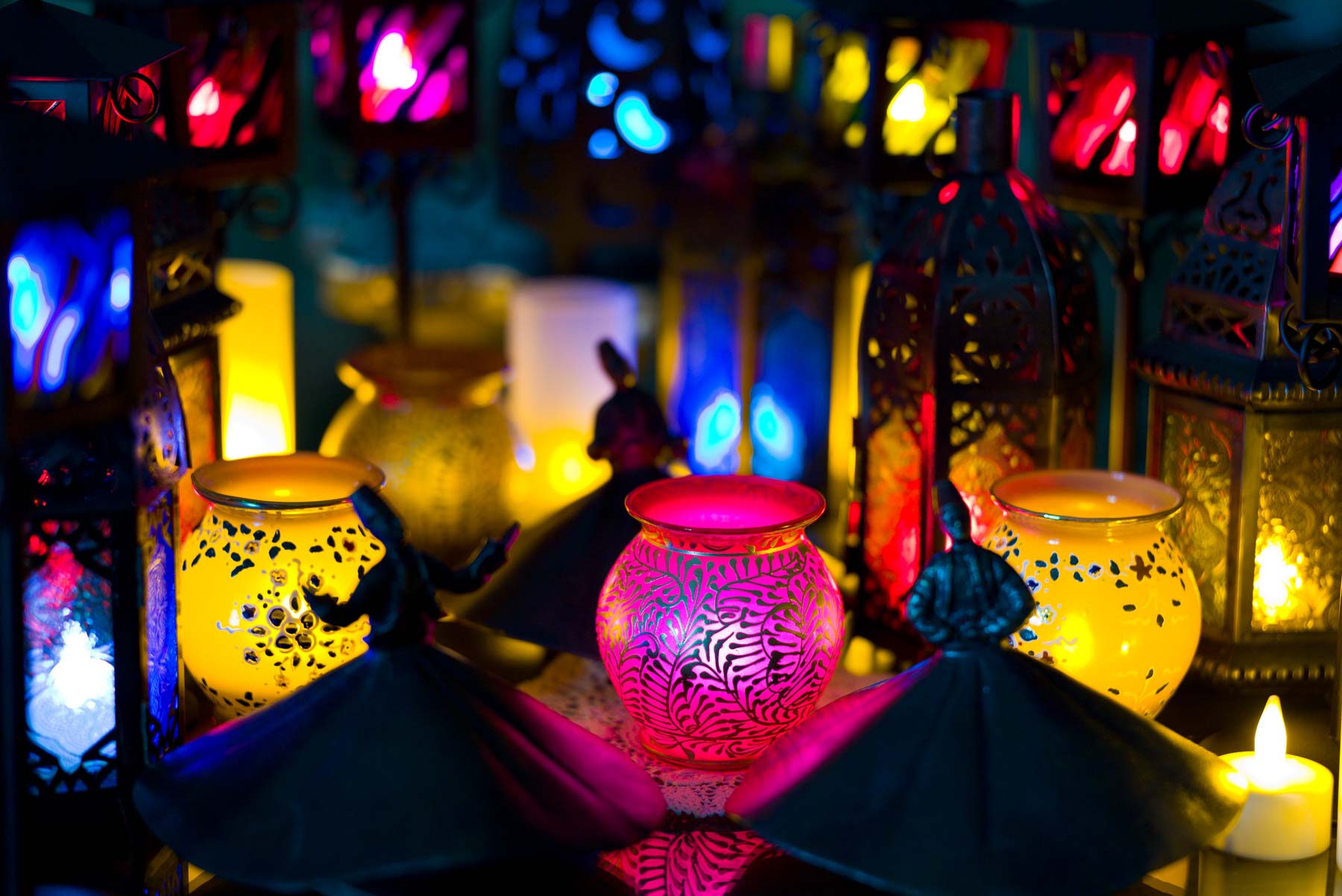
Across the world, small electric lights evoke feelings of hope, unity, and faith, especially during holiday seasons.
But there are risks
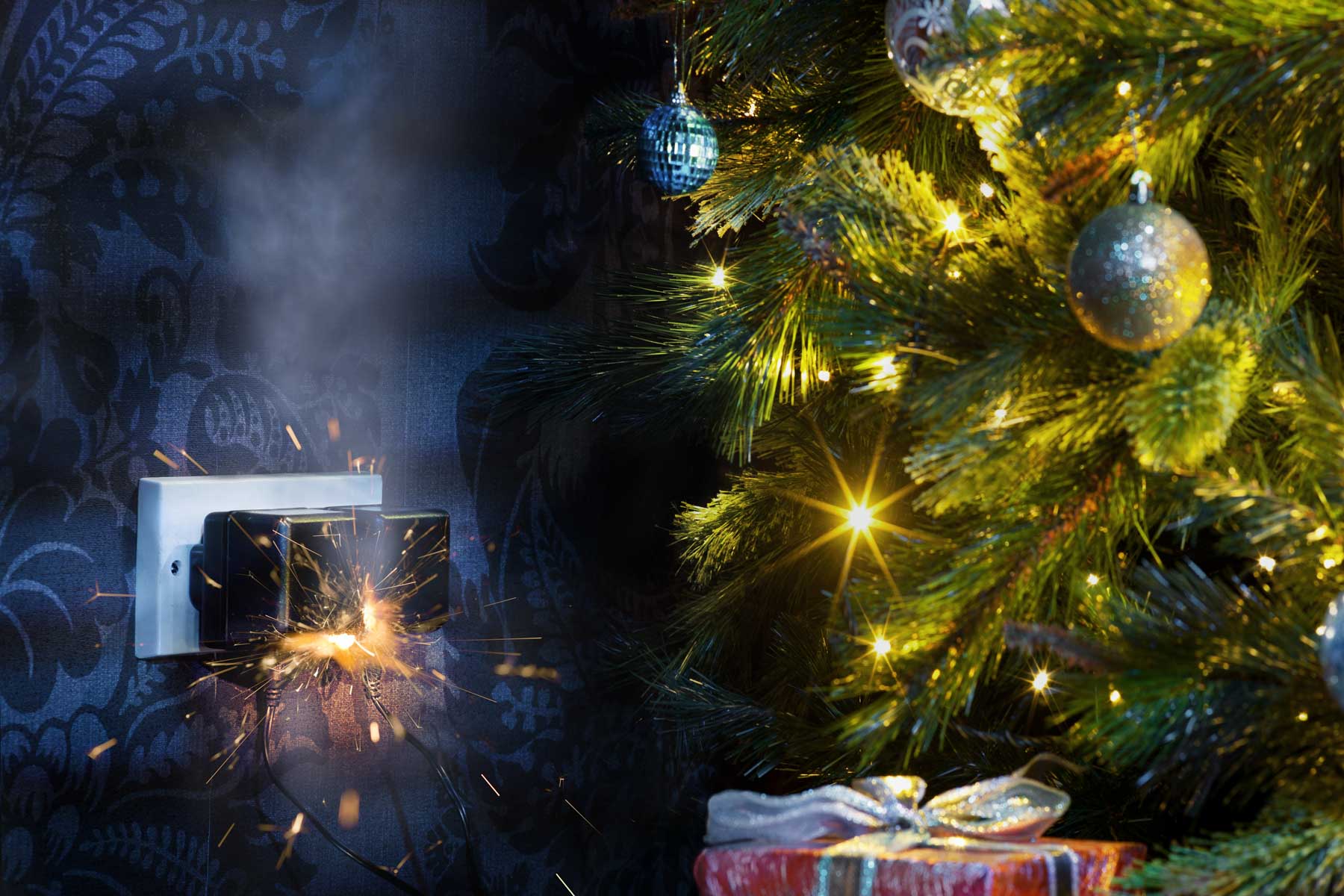
Poorly constructed lights can pose safety risks, including fire and shock, and consumers may not have cause for concern because these decorations are temporary.
For example
In the 2022 U.S. holiday season, about 14,800 Americans were treated for holiday decorating-related injuries in hospital emergency departments. 1

How can producers promote safety for users of holiday lights as they celebrate cultural holidays?
Background
From antiquity to the modern era, religion, spirituality, and culture have evolved side-by-side with advancing technologies, and sometimes, they have even been reflected in products and inventions. Festivals of lights in nearly every corner of the world are spectacular examples of intertwining culture, symbolism, religion, and invention: Diwali, the Hindu festival of lights; Hanukkah, the Jewish festival of lights; the Lantern Festival, the final day of Lunar celebrations in China and the Asian world; Eid al-Adha; Candlemas; Kwanzaa; Mardi Gras; etc. While festivals of lights may once have relied on oil lamps or wax candles for illumination, they now are often electric powered, with delicate strings of lights, or individually lit components powered by AC circuits or DC batteries.
In the U.S., the tradition of electric lights during the holidays began as early as 1894, when President Grover Cleveland hung the first electrical lights on a Christmas tree in the White House 2. Many developments have been made since then as households across the country have adopted the same practice, but some risks and hazards still remain. In the 2022 holiday season in the U.S., about 14,800 people were treated in hospital emergency rooms due to holiday decorating-related injuries, including falls, electrocutions, and burns 1. One way to reduce holiday fires is to make sure that the decorations themselves do not add to fire risk. Common pitfalls in holiday decoration contribute to the risk of fire and injury. Since 1965, UL Standards & Engagement has been defining stringent requirements for various safety measures related to seasonal and holiday decor, and yet, from education to manufacturing and testing, there is still more to be done so we can all share a safer, brighter holiday season.
Question
Why might temporary electrical holiday decorations, such as light strings or electrically lit paper lanterns, be particularly prone to fires?
Problem
The nature of light-up holiday decorations makes them a fire hazard for several reasons.
- First, seasonal lights are temporary. They will only be used for a few months or less, and then stored or discarded. As such, consumers may have lower expectations for the product and buy cheaper, lower-quality decorations which may be made poorly and not able to hold up to tough use. And because the use of the product is only temporary, consumers might tolerate a frayed cord, a cracked socket, or a loose plug that would not meet their expectations for a permanent decoration. If string lights become tangled in storage and are pulled apart with force, cheaply constructed lights might fail more readily than higher quality, more expensive lights.
- Second, lights on the market have some common pitfalls — they all use wiring enclosed in rubber or plastic jacketing that prevents the user from inspecting the wire. If the wire’s internal insulation degrades or is damaged, causing a short circuit and thus a fire hazard, then the user could not visually detect the risk inside the jacket. Wires and lights may be further enshrouded inside of an internally lit decoration composed of combustible materials. In that case, the user might also be unable to inspect the wires, bulbs, and circuits.
- Third, the installer is most likely an everyday person, not necessarily an electrician or electrical expert. This means that light strings and other lit holiday decor might be installed in unsafe ways such as daisy-chained together (putting excessive current on the circuit), installed outdoors when intended for indoor use (or vice versa), or installed near flammable materials such as paper, cellophane, or wood. An amateur installer might not know what to look for when inspecting damaged lights or how to replace a damaged bulb or plug safely.
- And finally, an extended duration of the holiday season might increase the risk of fire. For example, in the U.S., if Christmas decorations, including a tree with lights, go up before Thanksgiving and stay up through January, there is more chance for a tree to dry out and become combustible, increasing the potential for a fire caused by holiday lights. In the Philippines, the Pasco, or Christmas season, is long, with some reports that lights go up as early as September before the official start of the Christmas season in November.
Seasonal fire danger in the U.S. has long been connected to electrical lights because the lights were often made cheaply for temporary use, mistreated when untangling and storing, and they were often installed by amateurs and placed near or on incendiary objects or too close to other sources of heat. The quality of the plug housing, wire thickness, wire insulation, fuse presence, and bulb wattage contributed to the risks of using holiday lights. Annually, 835 home structure fires in the U.S. begin with decorations that are not Christmas trees, while an additional 155 home Christmas tree fires occur, with 40% of these caused by electrical distribution or lighting equipment 3. Fire danger has been and remains a threat during the holiday season.
Question
What kinds of quality issues might matter in a string of lights? Use your knowledge of electrical circuits to determine what components might be changed when string lights are made cheaply, and what the impact of those changes might be.
Approach
In the U.S., the National Electrical Code (a.k.a., “NEC” or “NFPA 70”) contains provisions on how to install permanent lights in buildings and how to ensure household wiring is safe to plug lights into. Local authorities adopt building codes, and builders adhere to building and electrical codes as they construct and wire electricity in homes. The lights that can be plugged in or wired are considered products, and the NEC indicates that all lights must be listed by a nationally recognized testing laboratory. For holiday lights, UL 588, the Standard for Seasonal and Holiday Decorative Products, is the listing standard. UL 588 is technically voluntary, but key safety characteristics from the standard are referenced by the Consumer Product Safety Commission in its substantial product hazard rule for holiday lighting products. Effectively, this means that any holiday light used in the U.S. that is certified as compliant with safety standards would use UL 588 compliance to demonstrate product safety for the U.S. market.
UL 588 defines the scope of what a seasonal holiday light or decoration is. A temporary-use, seasonal decorative-lighting product covered by this standard is only to be used for 90 days or fewer in a year. If a light were intended to be used more than that, then it would not be considered seasonal. The standard also identifies the types and parts of seasonal decorations and the restrictions on those parts for safety, including seasonal decorative lighting products and accessories like decorative lighting strands, wreaths, light sculptures, and motorized displays. Over time, UL 588 has changed to provide testing guidance for many temporary and even permanent light styles such as LED lights, rope lights, and year-round outdoor patio lights.
UL 588 provides guidance for the following:
- Safe limits on the strength and rigidity of indoor and outdoor holiday decor enclosures based on their composition (i.e., metallic or plastic)
- Various electrical supply connection types
- Requirements for strain relief in assemblies and wires
- Circuit requirements including every circuit’s battery, switches, wiring boards, lamps (bulbs), lamp holders, and fuses
- Markings for consumer awareness and use
UL 588 provides testing requirements for every safety-relevant component, too. Leakage current, small amounts of electric charge leaving their intended circuit, can cause shocks, so a leakage current test measures any current dissipating from all exposed conductive and insulating materials of the product. Excessive heat from a product could ignite fires if placed near flammable materials by the user, so a temperature test is used to help ensure lamps and other materials do not exceed safe temperature thresholds. A strain test helps ensure that when pulled, the product does not expose any conductive materials which could cause a short circuit or a shock to the user.
In the event of product failure, the downward burning rate test helps ensure that the material used to make the product will burn at a slow rate (no more than 4 inches per minute). Tests for normal and abnormal use and tests for markings and tags support user interactions, helping make sure that the user is informed of appropriate use and that the product is likely to remain safe even if misused. For example, plastic becomes more brittle in colder temperatures, so a cold impact test augments the traditional product impact test to help ensure that a consumer using a decoration in the winter would still be protected by a sturdy enclosure.
In the U.S., the impact of UL 588 being the listing standard for the NEC is regulatory. But regulation is rarely enough — implementation is also crucial, as is adapting to new contexts and technologies.
Question
What recent changes in culture or technology may impact the relevance of UL 588 and influence consumers and manufacturers to produce and use seasonal decorations safely?
Solution
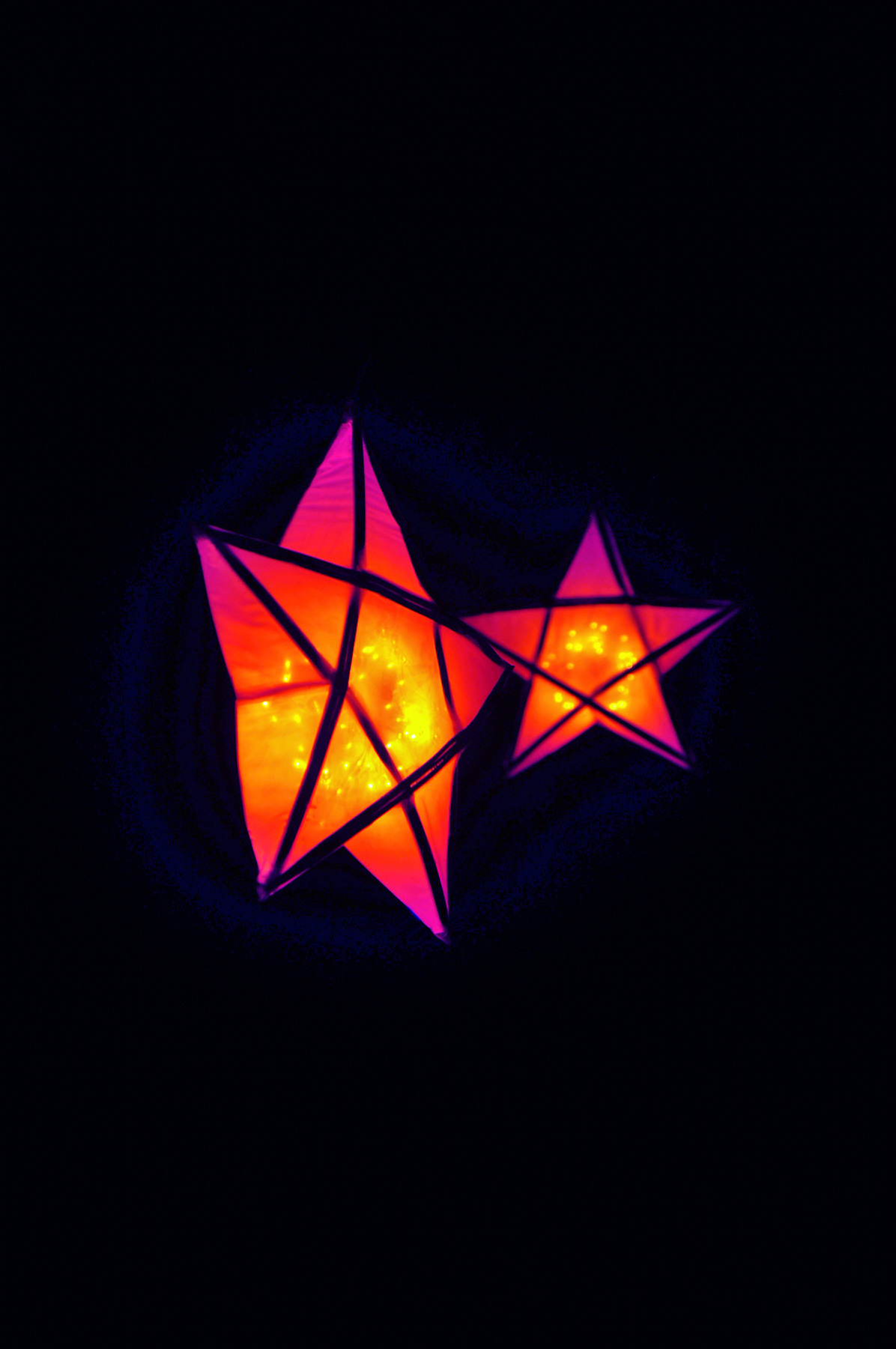
The UL Standards & Engagement Collaborative Standards Development System supports changes to standards through proposal, comment, vote, and adoption cycles. Thus, UL 588 is updated periodically. A recent update to the standard is the inclusion of the “lanterns” category of light-up decor, specifically to be inclusive of lanterns in the Philippines, where UL 588 was recently adopted [6]. In the Philippines, the colorful spectacle of hand-made paper lanterns, or parols, light up the night to celebrate the holiday season. Created both at home and by professionals in the City of San Fernando, the Christmas Capital of the Philippines, parol lanterns are a joyful spectacle of love, hope, and faith, influenced by native culture, Spanish influence, and resonant with other festivals of light and lanterns throughout Southeast Asia [5].
In 2020, the Philippines’ Department of Trade and Industry’s Bureau of Philippine Standards (DTI-BPS) signed a collaboration and licensing agreement with UL Standards & Engagement to “share information and bolster safety, security, and sustainability of the Philippines.” In December 2022, DTI-BPS adopted UL 588, the Standard for Seasonal and Holiday Decorative Products, which specifically covers temporary light strands and assemblies including stars and light sculptures, like parols. Products in the Philippines can be certified to UL 588 if they meet the strength and rigidity standards to withstand normal use, and if they meet the wire gauge, overcurrent protections (fuses), and linking requirements to help prevent risks of electrical shock and electrical fires.
In addition to adding lanterns, the standard has been revised to acknowledge that products covered by UL 588 might be used year-round, even if a manufacturer advises they are to be used for 90 days or less. To mitigate the increased risk caused by continuous use, UL 588 includes a supplement on string lights for all-year use, listing additional requirements for safety:
- Larger wire gauge size and increased insulation thickness of the wire to minimize overheating and fire hazards, especially when multiple devices are connected in series
- Enhanced flexibility and strain requirements to ensure wires will not break or pull out of insulation during use
- Different safety markings and instructions for year-round use of lit decor.
In addition to regulations, education can help implement safety standards effectively. In the case of the Philippines, ULSE is working with DTI-BPS to educate parol manufacturers on how to construct lanterns that meet UL 588. DTI-BPS is also engaged in educating the public on how to look for the Philippine Standard Mark, indicating the product has met UL 588’s testing standards. In the U.S., education remains an important goal as well. Annual nationwide public service campaigns by the National Fire Protection Association (NFPA) stress the importance of complying with UL 588 restrictions. For example, if a string of lights connects with other strings, knowing how many are safe to string together is essential. The NFPA works to influence safe consumer actions like looking for certification insignia, keeping lights away from heat and flammable materials, and turning off lights at night.
Still, just the existence of an appropriate safety standard and recommendations to look for safety marks does not mean that consumers are guaranteed safe products. Additional oversight helps ensure that when unsafe items come onto the market, they are recalled or eliminated. In the U.S., while retailers often only stock compliant products, there are exceptions. On Christmas Eve 1998, the U.S. Consumer Product Safety Commission recalled about 176,000 Christmas lights for being poorly constructed with undersized wires, no fuses, and wires that could easily be pulled out of the plugs, presenting fire and electrocution hazards [7]. Recalling those strings helped to remove threatening products from the market.
A standard is a critical tool for ensuring global problems are addressed through iterative, collaborative problem-solving.
This is just a small recap, and you are encouraged to view the standard, in full, for free, by creating an account at ShopULStandards.com and using the Digital View feature.
Discussion Questions
- What role does science education play in supporting consumer understanding of the safety of holiday lights and decor?
- Defend this statement with examples from the case study: Safety standards are only one part of a system of safe practices to protect consumers.
- What industries, partnerships, or regulators would you encourage the Bureau of Philippine Standards to explore to ensure UL 588 has a positive impact on the safety of Philippine citizens?
- What data might you collect to understand the impact of UL 588 in the Philippines?
Glossary
- Leakage current
A small amount of electricity that leaves the electrical circuit and travels somewhere unintentionally. Leakage current can indicate a damaged circuit, waste energy, and cause electrical shocks.
References
- Make it a “Home Safe Home” for the Holidays. (2023). U.S. Consumer Product Safety Commission. https://www.cpsc.gov/Newsroom/News-Releases/2024/Make-it-a-Home-Safe-Home-for-the-Holidays
- White House Christmases Past. (2014). The White House Historical Association. https://www.whitehousehistory.org/christmas-at-the-white-house-overview
- National Fire Protection Association. (2024, December 1). December is Leading Month for U.S. Home Fires. NFPA.org. https://www.nfpa.org/about-nfpa/press-room/news-releases/2024/december-is-leading-month-for-us-home-fires
- UL Standards & Engagement. (2025, June 4). ULSE-BPS Conference 2024 – Lights and Lanterns: Shining Safely to the Worldhttps://ulse.org/insight/ul-standards-engagement-international-partnerships-ulse-bps-conference-2024-lights-and-lanterns/
- UL Standards & Engagement. (2025, May 28). Bureau of Philippine Standards Adopts Three UL Standards on Electrical Wiring Devices – UL Standards & Engagement. https://ulse.org/insight/ul-standards-engagement-international-partnerships-bureau-philippine-standards-adopts-three-ul/
- U.S. Consumer Product Safety Commission.(1998, December 24). CPSC, Yang Lin Trading, Wholesale World Announce Recall of Christmas Lights. https://www.cpsc.gov/Recalls/1999/CPSC-Yang-Lin-Trading-Wholesale-World-Announce-Recall-of-Christmas-Lights